
How to Search Moore County Court Records
The main online access point is the NC eCourts Portal. Moore County became an eCourts county in Track 6, so the portal supports Smart Search for court records and case information, Search Hearings for court dates, Make Payments for eligible criminal and infraction obligations, and NC Judgment Search for judgment indexes. The portal is statewide. A Moore County search should use county or location filters when they are available.
Online access is only one channel. Public self-service terminals in clerk offices can show criminal, civil, special proceeding, and estate case information. Paper files for Moore County cases are reviewed at the Clerk of Superior Court in Carthage. Certified copies come from the clerk where the case was filed, while Judicial Branch public-record requests are mainly for NCAOC administrative records.
- Open the portal and choose Smart Search, Search Hearings, Make Payments, or NC Judgment Search.
- Search by party name, case number, citation number, attorney, judicial officer, courtroom, or date range when the field applies.
- Filter to Moore County before treating a result as local.
- Use the docket or hearing result to confirm date, courtroom, case number, and case status.
- Contact the Clerk of Superior Court for paper files, certified copies, older records, or access questions.
The official Moore County Judicial Branch page links court dates, forms, payments, services, and county court resources.
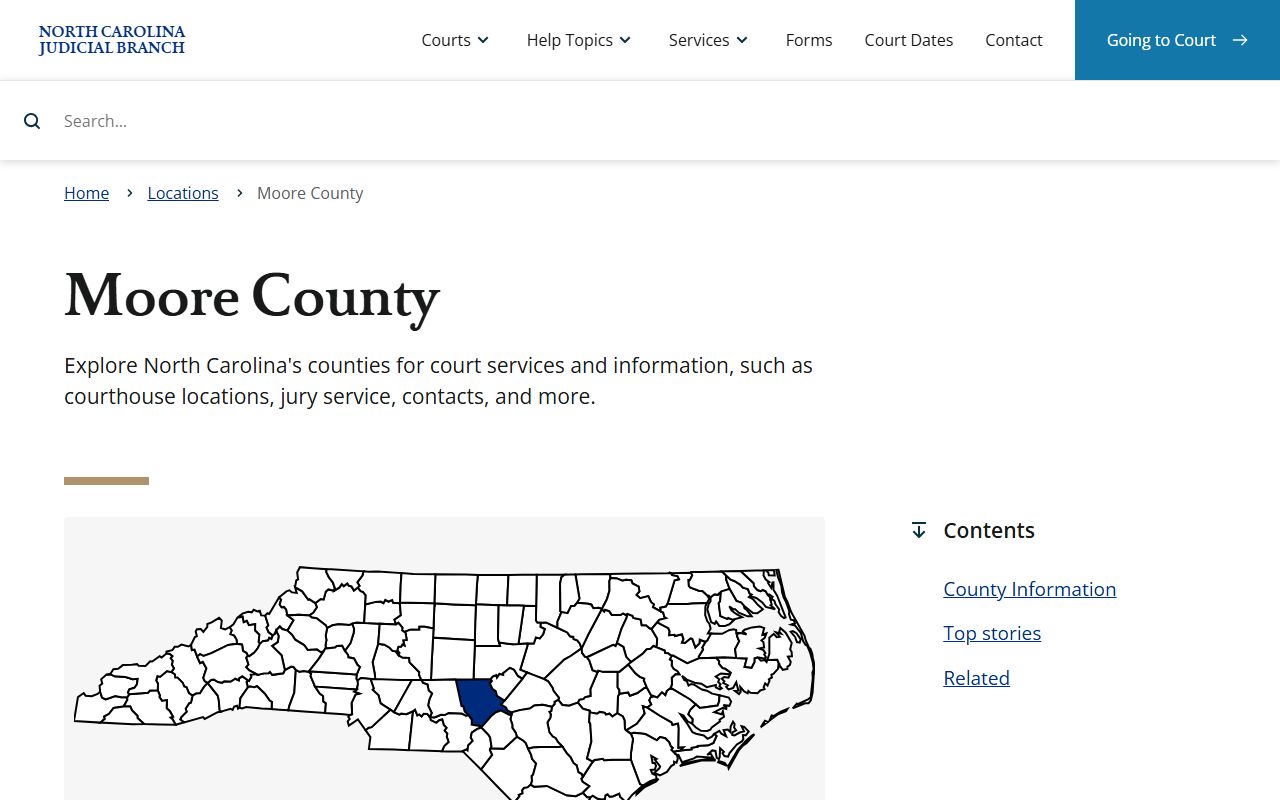
That county page is the best official starting point when a search needs both statewide tools and local Moore County court information.
Moore County Court Records Search Fields
The portal separates case lookup, hearing lookup, judgment search, and payments into different functions. Smart Search covers case information. Search Hearings supports court dates and courtroom details. NC Judgment Search shows indexed judgment data under the court-record statute. Make Payments is limited to eligible probation, parole, criminal, and infraction obligations.
| Field Label | Type | Use |
|---|---|---|
| Smart Search | Search tile | Case records and case information. |
| Search Hearings | Search tile | Court dates, hearings, courtroom, county, and date filters. |
| Name | Text | Party, business, or nickname search with supported wildcard options. |
| Case number | Text | Exact or wildcard case-number searching. |
| Citation number | Text | Traffic and infraction court-date searching. |
| Judicial officer / courtroom | Filter | Hearing search details. |
| Case type, status, date | Filters | Judgment and hearing filtering. |
The portal landing page itself is shown in the NC eCourts Portal screenshot.
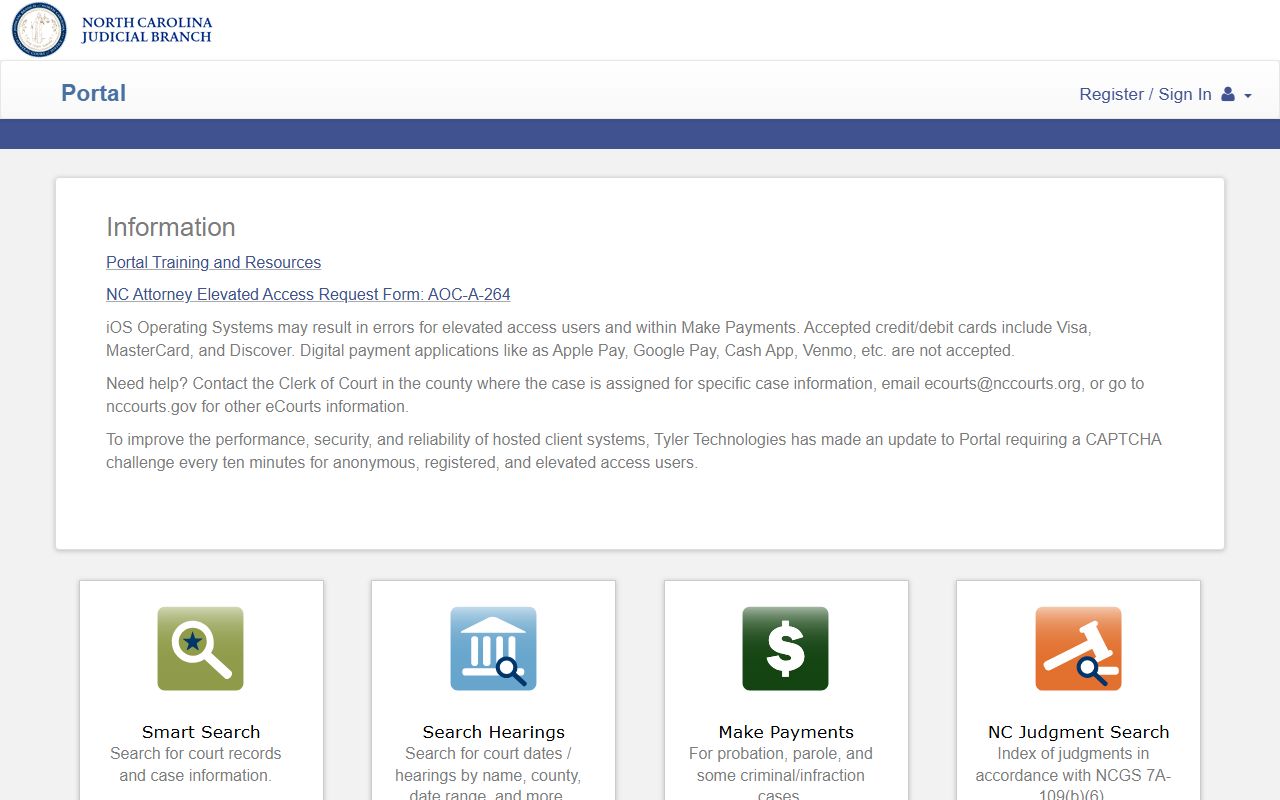
The portal tiles explain why a hearing search, a judgment search, and a full case lookup may return different kinds of Moore County court data.
The Moore County Court System
North Carolina has no separate local court systems. The state court structure moves from the Supreme Court of North Carolina to the Court of Appeals and then to the trial courts in the Superior Court Division and District Court Division. Moore County cases are heard through those statewide trial divisions at the local courthouse in Carthage. Appeals from local trial courts normally move to the Court of Appeals before any Supreme Court review.
Superior Court hears felony criminal matters, civil cases involving $25,000 or more, and appeals from District Court. District Court handles misdemeanors, infractions, most traffic matters, domestic and juvenile cases, small claims functions through magistrates, and civil cases below the Superior Court threshold. Moore County is in Judicial District 29 with Hoke County for District Court and Prosecutorial District 29 for the District Attorney.
Case flow: Magistrate or filing › District Court or Superior Court › North Carolina Court of Appeals › Supreme Court of North Carolina when review is allowed.
| Court or Office | Jurisdiction | Case Types |
|---|---|---|
| Superior Court | General trial jurisdiction for higher matters. | Felonies, major civil cases, District Court appeals. |
| District Court | Limited trial jurisdiction and high-volume cases. | Misdemeanors, traffic, domestic, juvenile, small claims appeals. |
| Magistrates | District Court judicial officers. | Initial appearances, warrants, small claims functions, marriages. |
| Clerk of Superior Court | Record custodian and probate official. | Files, copies, estates, judgments, public terminals. |
The official North Carolina court structure page explains the statewide court hierarchy.
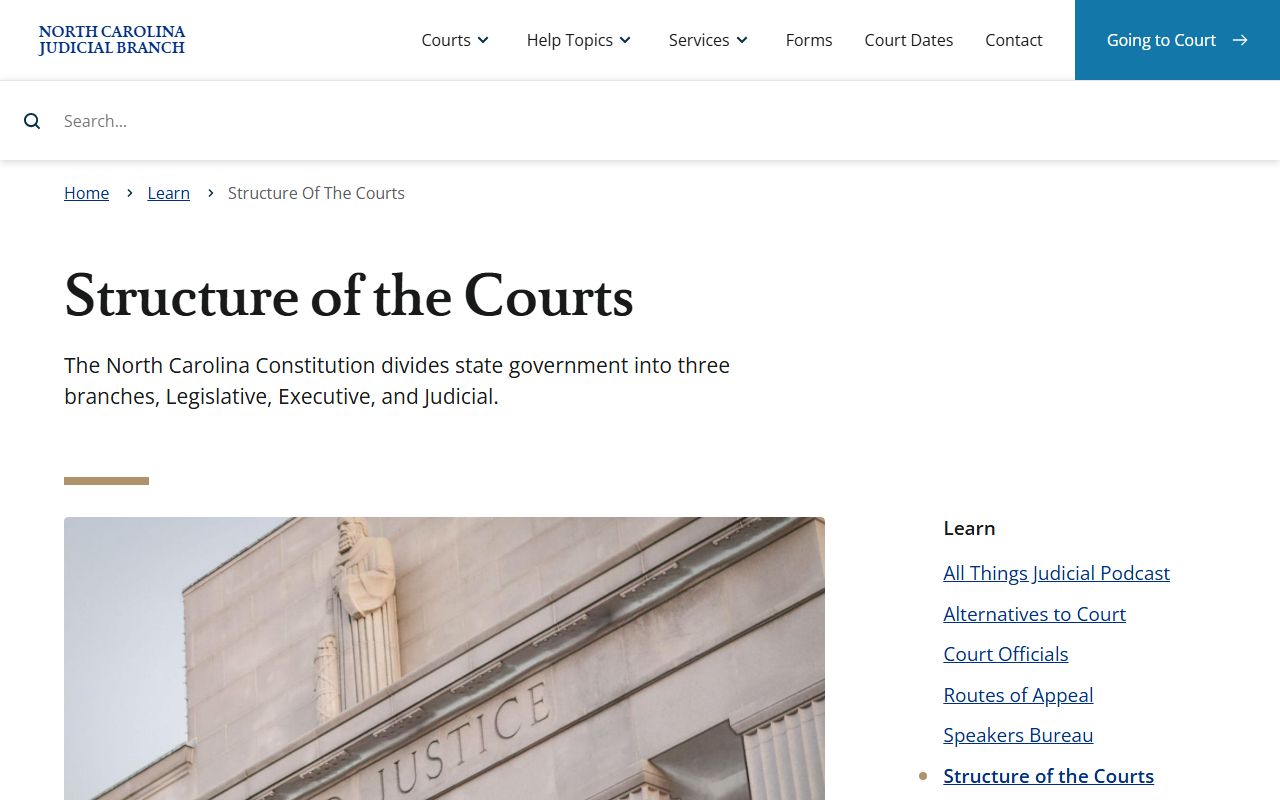
That statewide structure is the reason Moore County searches should not be split into city-court or justice-court lookups.
Moore County Courthouse in Carthage
The Moore County Courthouse is the local point of access for Superior Court, District Court, the Clerk of Superior Court, magistrates, family court administration, jury service, court payments, public self-service terminals, and physical case files. Public hours are Monday through Friday, 8:00 AM to 5:00 PM. Parking is limited near the courthouse, and the official courthouse page points visitors to the closest parking behind the Register of Deeds Office on Dowd Road.
Moore County Courthouse
102 Monroe St
Carthage, NC 28327
Mailing: PO Box 936, Carthage, NC 28327
(910) 722-5000
District Attorney District 29
103 W. Saunders Street
PO Box 429
Carthage, NC 28327
(910) 722-5010
Moore County Register of Deeds
26 Courthouse Square
PO Box 1210
Carthage, NC 28327
910-947-6370
The official Moore County Courthouse page shows the court address, mailing address, hours, parking, and accessibility details.
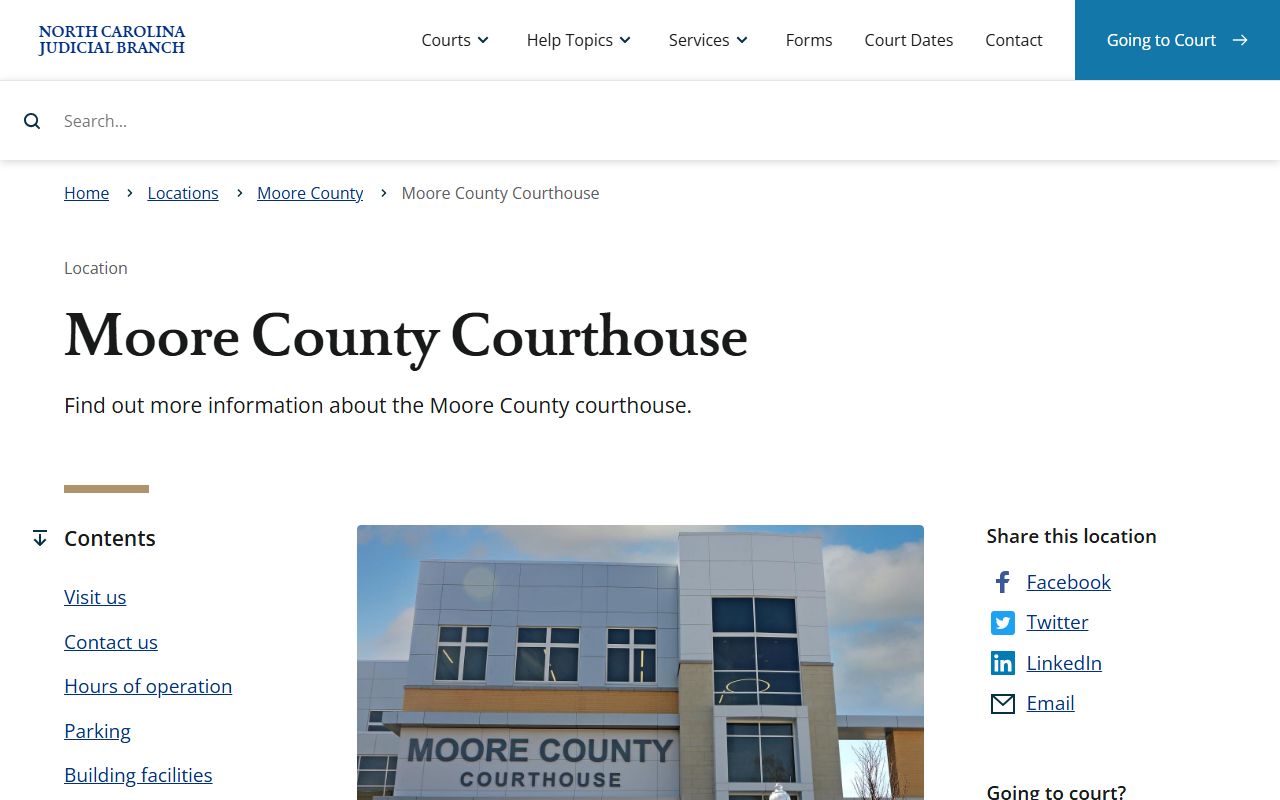
Courthouse details matter because paper files, certified copies, clerk terminals, and many in-person payments still depend on the Carthage facility.
Types of Moore County Court Records
Moore County court records include criminal, civil, family, divorce, traffic, estate, special proceeding, judgment, and docket materials. Criminal records may show charges, pleas, hearings, dispositions, sentencing, costs, and probation details. Civil records may show complaints, summonses, answers, motions, orders, judgments, dismissals, liens, foreclosures, and appeal entries. Family and divorce cases are District Court matters, while divorce judgments are obtained through the clerk where granted.
Estate and probate records are handled by the Clerk of Superior Court acting as probate official. Traffic citations and infractions are District Court records, not city-court files. Juvenile, adoption, mental-health, sealed, expunged, and some protected-order information is restricted. Law-enforcement incident reports are not court case files. Sheriff incident reports for county incidents go through the Sheriff's Office, while municipal incidents go to the relevant police department.
- Criminal records track accusations, hearings, disposition, sentence, and court costs.
- Civil records track claims, responses, orders, judgments, and enforcement activity.
- Family records include divorce, custody, support, alimony, and protective-order cases.
- Probate records include wills, estate administration, inventories, accountings, and clerk orders.
- Traffic records include citation numbers, court dates, waivers, payments, and dispositions.
What Moore County Court Records Show
A court record usually starts with identifiers. The case number connects the file to a county, year, type, and sequence. The court division shows whether the matter is in Superior Court, District Court, estate, special proceeding, judgment, or another category. Party fields identify plaintiffs, defendants, petitioners, respondents, the State, estate names, or other participants. Attorney names, bar numbers, hearing dates, courtroom details, and judicial officer data may appear in hearing searches.
| Field | What It Shows |
|---|---|
| Case number | North Carolina case identifier, such as a civil district format shown by Family Court examples. |
| Filing or index date | When a case, event, or judgment was filed or indexed. |
| Parties | Names or roles of plaintiffs, defendants, petitioners, respondents, or the State. |
| Charges or cause | Criminal offense, traffic citation, civil claim, or estate matter. |
| Disposition | Pending, dismissed, disposed, judgment entered, closed, appealed, sealed, or expunged status. |
| Financial obligations | Fines, fees, restitution, court costs, civil judgment amounts, and payment data. |
Public Access Laws for Moore County Court Records
North Carolina public access begins with broad public-record law, but court files are also governed by a court-specific statute. G.S. 132-1 defines public records for state and local government agencies. G.S. 132-6 covers inspection and copying at reasonable times. G.S. 7A-109 requires clerks to maintain court records, files, dockets, and indexes and makes them open during regular office hours except when law restricts access.
Key statutes:
G.S. 132-1 defines public records broadly for North Carolina government records.
G.S. 132-6.2 governs copy media, copy fees, and special service charges.
G.S. 7A-109 is the clerk recordkeeping and public-inspection statute for court files.
The Judicial Branch obtaining court records help topic explains how criminal, civil, estates, divorce judgment, vital, law-enforcement, and real-estate records are separated.
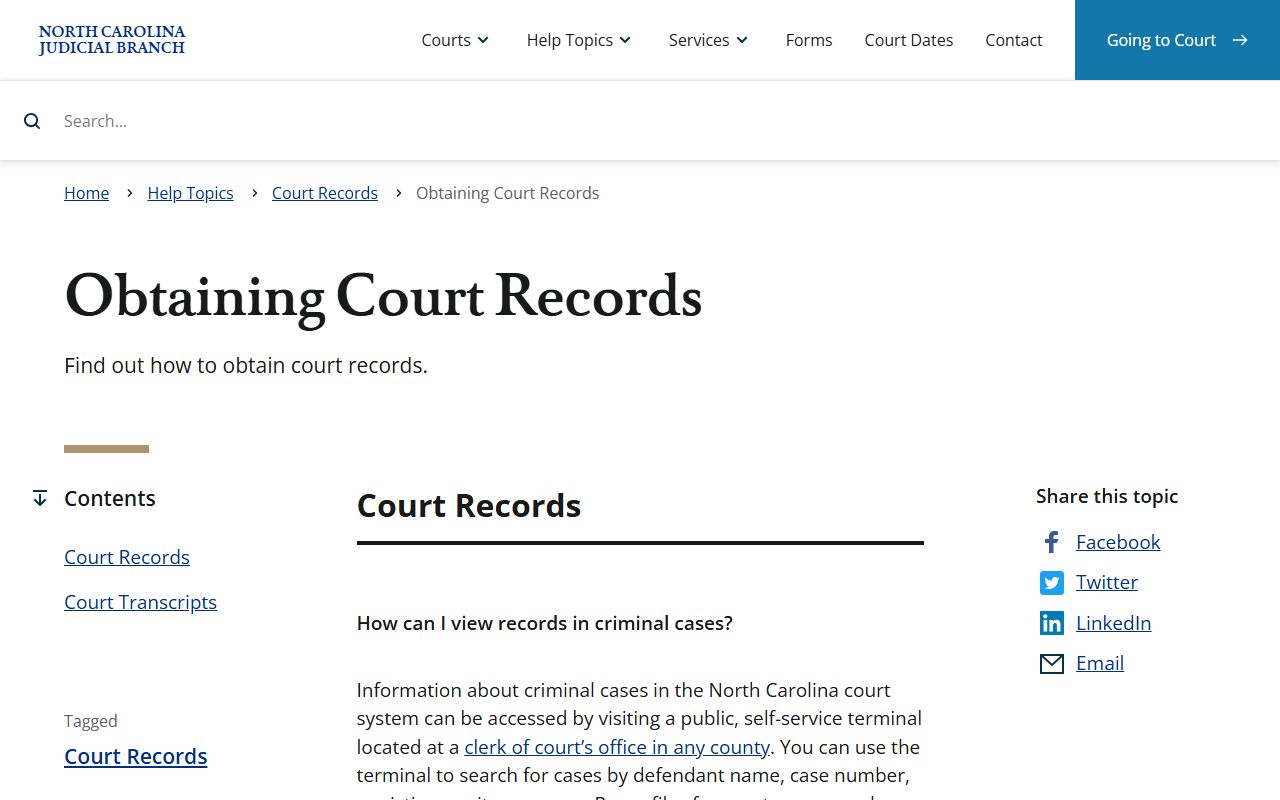
That distinction prevents users from asking the clerk for Register of Deeds records or asking the Register of Deeds for court case files.
Restricted Moore County Court Records
Some Moore County records are not searched like ordinary adult case files. Juvenile delinquency, abuse, neglect, dependency, adoption, and many mental-health records are restricted. Sealed and expunged records should not be expected in public portal results or clerk-terminal searches. Sensitive identifiers such as Social Security numbers, account numbers, driver license numbers, passport numbers, protected addresses, and minor information may be redacted from otherwise public material.
Expunction requires a legal process in the county where the matter occurred. A person must identify the exact charge or conviction, match it to the right North Carolina statute, and seek a court order. G.S. 15A-145.5 covers certain nonviolent misdemeanors and felonies, and Chapter 15A Article 5 contains other expunction categories. Waiting periods, exclusions, and prior-record limits depend on the exact law and disposition.
Moore County Sheriff and Jail Records
The Moore County Sheriff's Office is at 302 S McNeil Street in Carthage. Sheriff Ronnie Fields is the current sheriff. The office phone is 910-947-2931, the emergency number is 911, and the anonymous tip line is 910-947-4444. The Detention Center is at the same general Carthage law-enforcement complex and lists phone 910-947-2980. Patrol operates around the clock, while administrative office hours are Monday through Friday, 8 am to 5 pm.
The detention search portal has Inmates, Charges, and Days search modes. The inmates grid shows Full Name, Age, Race, Sex, and Admit Date. The charges grid shows charge-description entries. The Sheriff's Office also links an official Moore County Sheriff's Office app through OCV, but crawlable official text did not confirm an app-only inmate or warrant search feature. The Sheriff's Services page says incident reports for county incidents can be requested by calling or visiting the Sheriff's Office; municipal incidents route to the local police department.
Moore County Marriage Divorce Probate Records
Marriage licenses, certified marriage copies, birth and death records, deeds, plats, powers of attorney, and recorded instruments are handled by the Moore County Register of Deeds, not the Clerk of Superior Court. The Register of Deeds office is at 26 Courthouse Square in Carthage, with mailing address PO Box 1210, phone 910-947-6370, and weekday public hours. The county warns that back-filing from January 1, 1888 through June 30, 1988 is still in process, so older recorded-document searches may require office index books.
Divorce judgments are court records obtained from the Clerk of Superior Court in the county where the divorce was granted. Absolute divorce filings are District Court matters. Estate administration and probate are handled by the Clerk of Superior Court acting as ex officio judge of probate. Probate files may include wills, applications, oaths, letters, inventories, creditor notices, accountings, receipts, orders, and closing documents.
- Executor
- A person named in a will to administer the estate after qualification.
- Administrator
- A person appointed when there is no valid will naming an executor.
- Intestate
- Dying without a valid will, so distribution follows state law.
Moore County Court Records Fees
Fees depend on the record type and office. NCAOC inspection is not charged. NCAOC copies are $0.25 per page, and extraordinary requests may incur additional costs if extensive clerical, supervisory, or information-technology work is needed. Certified case documents must come from the Clerk of Superior Court for the county where filed. A certified single-county criminal background check through AOC-CR-314 costs $25.
| Item | Amount / Rule |
|---|---|
| NCAOC public-record inspection | No inspection fee. |
| NCAOC copies | $0.25 per page. |
| Certified criminal record search, single county | $25 through the Clerk of Superior Court. |
| Certified birth, death, or marriage copy from Register of Deeds | $10 each. |
| Uncertified vital copy from Register of Deeds | $0.25 each. |
| Marriage license | $60. |
How to Interpret Moore County Court Records
Start by identifying the record type. A charge is an accusation. A conviction is a criminal judgment finding guilt by plea or trial. A dismissal means a charge or claim ended without conviction or judgment for that claim. A disposition is the final result. A judgment is the court's decision or sentence. A continuance is a postponed hearing. A motion is a request asking the court to act, and an order is the judge's directive.
Case numbers also matter. Family Court Administration tells callers to have the file number from the upper right corner of court papers ready and shows the format 00-CVD-0123 as an example. That kind of code helps the clerk or case manager find the right case faster. The court division, case type, county, and filing date should be checked before assuming that two similar names refer to the same person or case.
Moore County Court Records History
Moore County court access is centered in Carthage near the courthouse square and county offices. The courthouse, Register of Deeds, county government offices, and District Attorney are close together, but they handle different records. Court files, divorce judgments, estates, traffic cases, criminal cases, and judgments belong with the Clerk of Superior Court and the state court system. Marriage licenses, recorded instruments, vital records, and older recorded-document index books belong with the Register of Deeds.
Modern access changed when Moore County adopted eCourts on October 14, 2024. Portal, File & Serve, Guide & File, and online payment functions became part of local court access. Attorneys must eFile through File & Serve where required, while self-represented litigants may eFile but are not required to do so. Older records still may require paper-file review, clerk assistance, or office index books.
The official North Carolina types of courts page explains Superior Court and District Court jurisdiction.
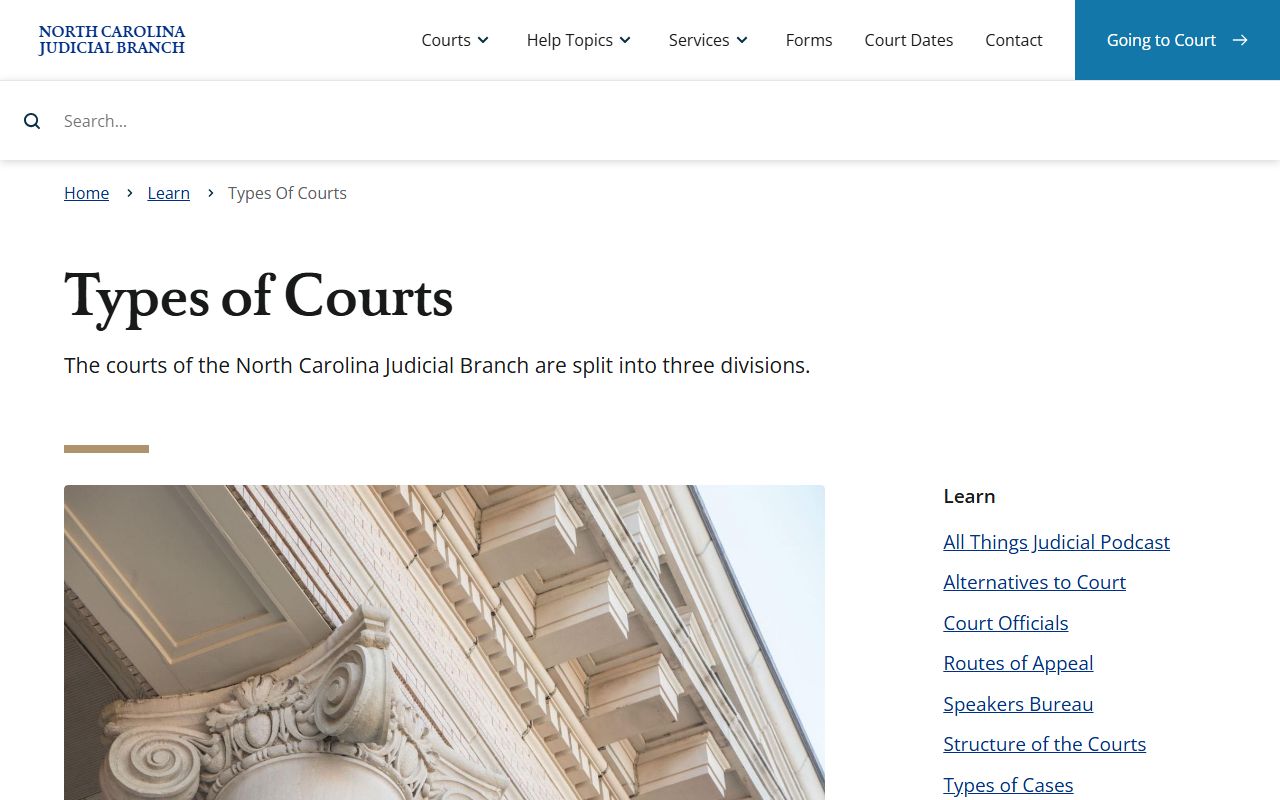
Those court-type definitions are essential for understanding whether a Moore County matter belongs in Superior Court, District Court, or a clerk function.
Moore County Court Contact Directory
The court contact directory is useful when a portal result does not answer a case-specific question. It lists the Clerk of Superior Court, Superior Court Judges, District Court Judges, Family Court, District Attorney, Guardian ad Litem, Magistrates, and the clerk email. Use the clerk for records, copies, terminals, estates, judgments, and file access. Use Family Court for family case-management questions when a file number is available.
The official Moore County contact directory shows the local court contacts in one place.
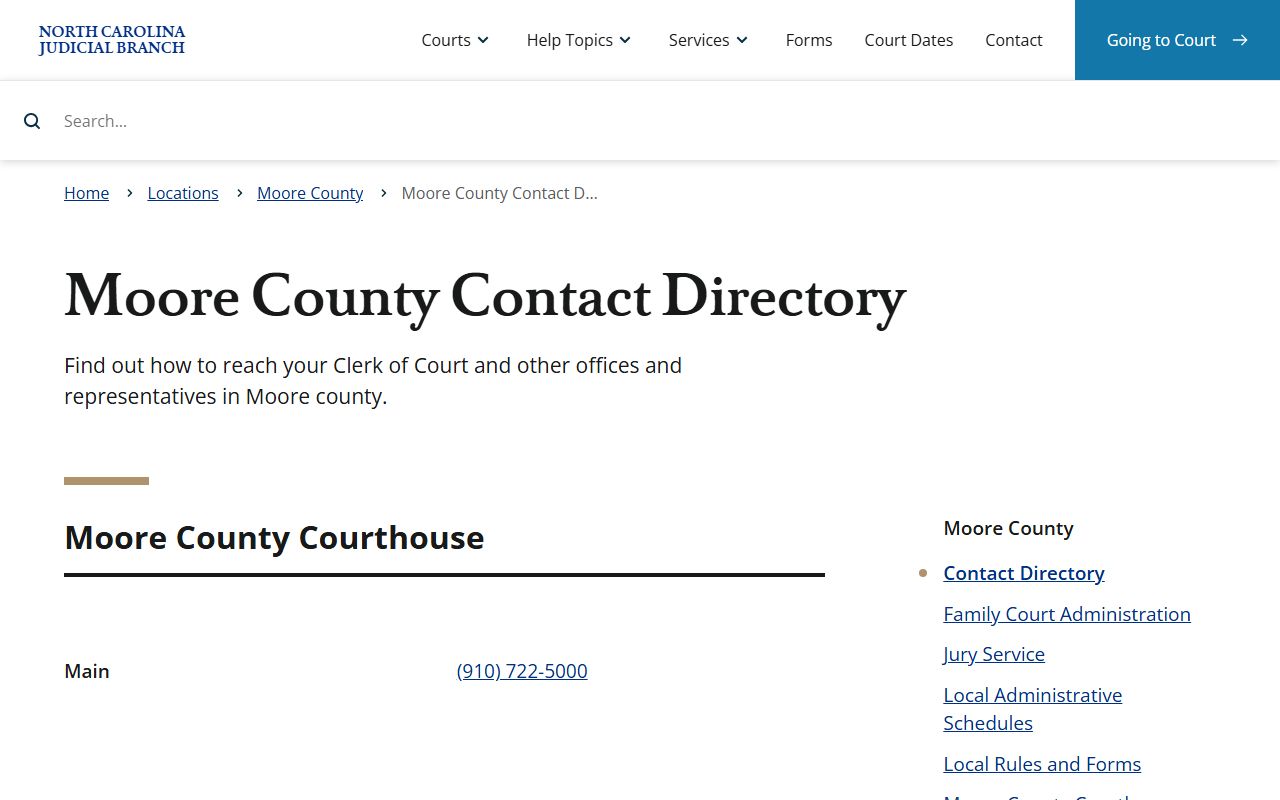
That directory is the safest source for checking whether a case question belongs with the clerk, judges' offices, family court, magistrates, or the District Attorney.
Frequently Asked Questions
Can Moore County court records be searched online?
Yes. NC eCourts Portal is the main online access point for case information, hearings, judgments, and eligible payments. Paper files, certified copies, older records, and some restricted records still require the Clerk of Superior Court or courthouse access.
Are Moore County traffic cases city court records?
No. North Carolina does not use a separate municipal trial court layer. Traffic citations and infractions in Moore County are District Court matters, even when a municipal police agency issued the citation.
Who certifies Moore County court records?
The Clerk of Superior Court certifies case records for Moore County cases. NCAOC can process certain public-record requests, but its policy says it cannot certify records.
Where are marriage records kept?
Marriage licenses and certified marriage copies are Register of Deeds records. Divorce judgments are court records obtained through the Clerk of Superior Court where the divorce was granted.