
Moore County Probate Court Role
North Carolina does not use a separate county probate court in Moore County. The Clerk of Superior Court handles estates and probate administration, serving as the Clerk of Superior Court acting as ex officio judge of probate / estates division. In plain terms, the Clerk's estates division is the local office for opening an estate, qualifying a personal representative, reviewing estate filings, and maintaining the probate record. That same clerk office also keeps civil, criminal, special proceeding, judgment, and divorce case records.
The North Carolina estates help topic explains that probate can mean estate administration generally, and it can also mean the court process used to decide whether a paper offered as a will is the decedent's valid final will.
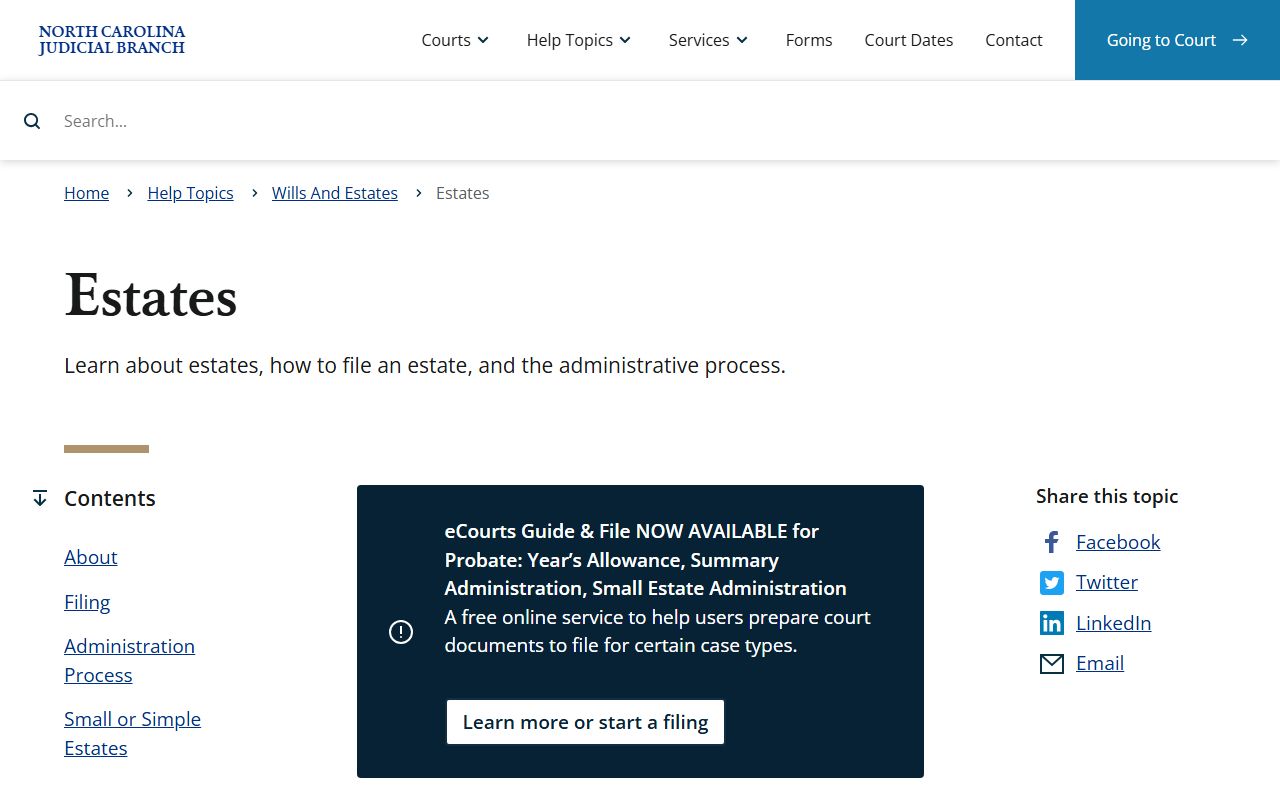
That statewide estates guidance supplies the core process because the official research did not locate a separate Moore County probate manual.
Moore County Probate Terms
Probate files use terms that are easy to confuse with normal court language. These definitions help separate the person who died, the person handling the estate, and the filings that may appear in a Moore County estate record. North Carolina estate administration may also involve small-estate alternatives or guardianship matters, but the research file did not locate Moore County-specific small-estate thresholds or a local timeline.
- Testator
- The person who made a will before death.
- Executor
- The person named in a will to carry out estate duties after being qualified by the clerk.
- Administrator
- A personal representative appointed when there is no qualified executor, often because there is no will.
- Intestate
- Dying without a valid will, so distribution is controlled by North Carolina intestacy law.
- Guardianship
- A court-supervised matter for a minor or protected adult, often with restricted records.
- Conservatorship
- A property-management concept used in some states; North Carolina research here points users to guardianship and estate administration terminology instead.
Search Moore County Probate Records
Moore County probate record access has several channels. The NC eCourts Portal may show estate or special proceeding case information where available. Public self-service terminals in a clerk of court's office can show civil, special proceeding, and estates case information in any county. The full paper file is reviewed through the clerk's office in the county where the estate case is located. For Moore County estates, that means the Moore County Clerk of Superior Court in Carthage.
- Search the NC eCourts Portal by estate name, party name, or case number when those fields are available.
- Use a public self-service terminal in a clerk's office if the online portal does not show enough detail.
- Contact the Moore County Clerk of Superior Court for the paper estate file, certified copies, or case-specific access questions.
- Use the Judicial Branch public records request process only for administrative Judicial Branch records, not as a substitute for estate file copies.
NCAOC public-record requests cannot certify records. Certified estate documents must come from the clerk for the county where the case was filed, so Moore County estate certifications route back to the local clerk's office.
Moore County Probate Contacts
The same courthouse serves Superior Court, District Court, the Clerk of Superior Court, magistrates, family court administration, and estate administration. The Judicial Branch courthouse page lists public hours, the main telephone number, mailing address, parking notes, and accessibility information. Parking is described as very limited, with the closest courthouse-page parking behind the Register of Deeds Office on Dowd Road.
Moore County Clerk of Superior Court
Estates and Probate Administration
102 Monroe St
Carthage, NC 28327
Mailing: PO Box 936, Carthage, NC 28327
(910) 722-5000
Monday-Friday, 8:00 AM-5:00 PM
For estate records tied to marriage status, name changes, or older family history, the Moore County marriage and divorce records page separates Register of Deeds records from divorce judgments held by the clerk.
Moore County Estate Administration
In full estate administration, the clerk gives authority to a personal representative. That representative identifies probate assets, gives public notice to creditors, pays valid debts and expenses, files required inventory and accounting papers, distributes remaining property under a will or intestacy law, and closes the estate when the clerk's requirements are met. Probate assets may include vehicles, bank accounts, stocks, bonds, furniture, jewelry, and other property that passes through the estate rather than by beneficiary designation or other non-probate transfer.
- Determine whether there is a will and whether assets require court administration.
- File the will and opening papers with the Moore County Clerk of Superior Court.
- Qualify the executor or administrator after clerk review.
- Inventory probate assets and give notice to creditors.
- Pay valid debts, file accountings, distribute remaining property, and close the estate.
The statewide File & Serve training page explains electronic filing and service for North Carolina court users.
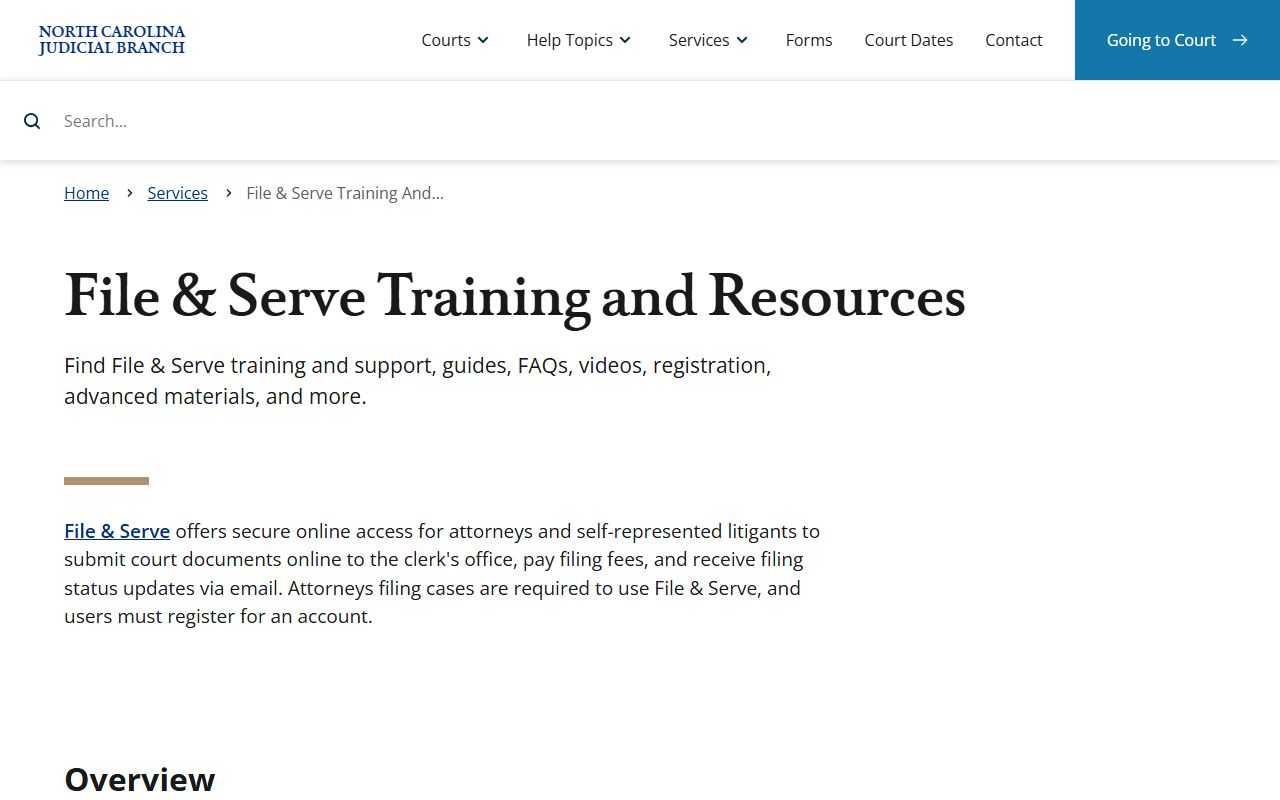
Attorney eFiling rules and self-represented filing options can affect how some estate or related court filings reach the clerk.
Moore County Probate Fees
The official research did not locate a Moore County-specific estate fee schedule, will-safekeeping policy, local probate form packet beyond statewide AOC resources, or typical local estate timeline. The safest fee path is to call the Moore County Clerk of Superior Court before filing or mailing a copy request. The available research does provide general court and public-record fee context that helps separate certification, inspection, and copy costs.
That gap should be treated as an access instruction, not as missing fine print to guess. Estate filing costs can depend on the filing type, document count, qualification issue, or copy need. A person opening an estate should confirm current costs with the clerk before mailing papers or arriving at the courthouse. A person who only needs to inspect a file should ask whether the file is available through the public terminal, the paper record room, or a clerk-assisted copy request.
| Item | Amount or Rule |
|---|---|
| Moore County probate filing costs | Confirm with Clerk of Superior Court at (910) 722-5000 |
| Certified estate document | Must come from the county clerk where the estate case was filed |
| NCAOC public-record inspection | No inspection fee under the NCAOC policy |
| NCAOC copies | $0.25 per page under G.S. 132-6.2 policy context |
| Extraordinary NCAOC administrative request | May involve a higher estimated charge for extensive IT or clerical work |
Note: The fee table does not replace the clerk's estate-cost quote, because the research file did not contain Moore County probate filing amounts.
Moore County Probate File Contents
A Moore County probate file can contain the will or codicil, an application or petition for probate or administration, death certificate or proof of death, oath and qualification papers, letters testamentary or letters of administration, inventory, notice to creditors, publication proof, accountings, receipts, releases, orders, and final closing paperwork. If a protected person or minor estate is involved, related guardianship filings may also appear, but those records are more likely to have restricted access.
| Document | What It Shows |
|---|---|
| Will or codicil | The decedent's stated plan for property and named executor, if accepted. |
| Application or petition | The opening request asking the clerk to begin estate administration. |
| Letters testamentary or administration | Proof that the personal representative has authority to act for the estate. |
| Inventory | Probate assets reported to the clerk. |
| Accountings | Receipts, payments, debts, expenses, and distributions during administration. |
| Orders and closing papers | Clerk actions and final estate completion documents. |
Restricted Moore County Probate Records
Probate records are not all open in the same way. The research file identifies sealed records, personal identifiers, mental-health records, juvenile matters, adoption records, and guardianship records as categories where normal public access can be limited. Estate files may include financial account details, Social Security numbers, protected addresses, minor information, or medical details that are redacted or withheld. The public terminal may show case information while the full document remains limited or available only to authorized people.
The North Carolina Judicial Branch marriage help topic sits outside probate, but it is relevant when estate users need to verify spouse status through a marriage record.
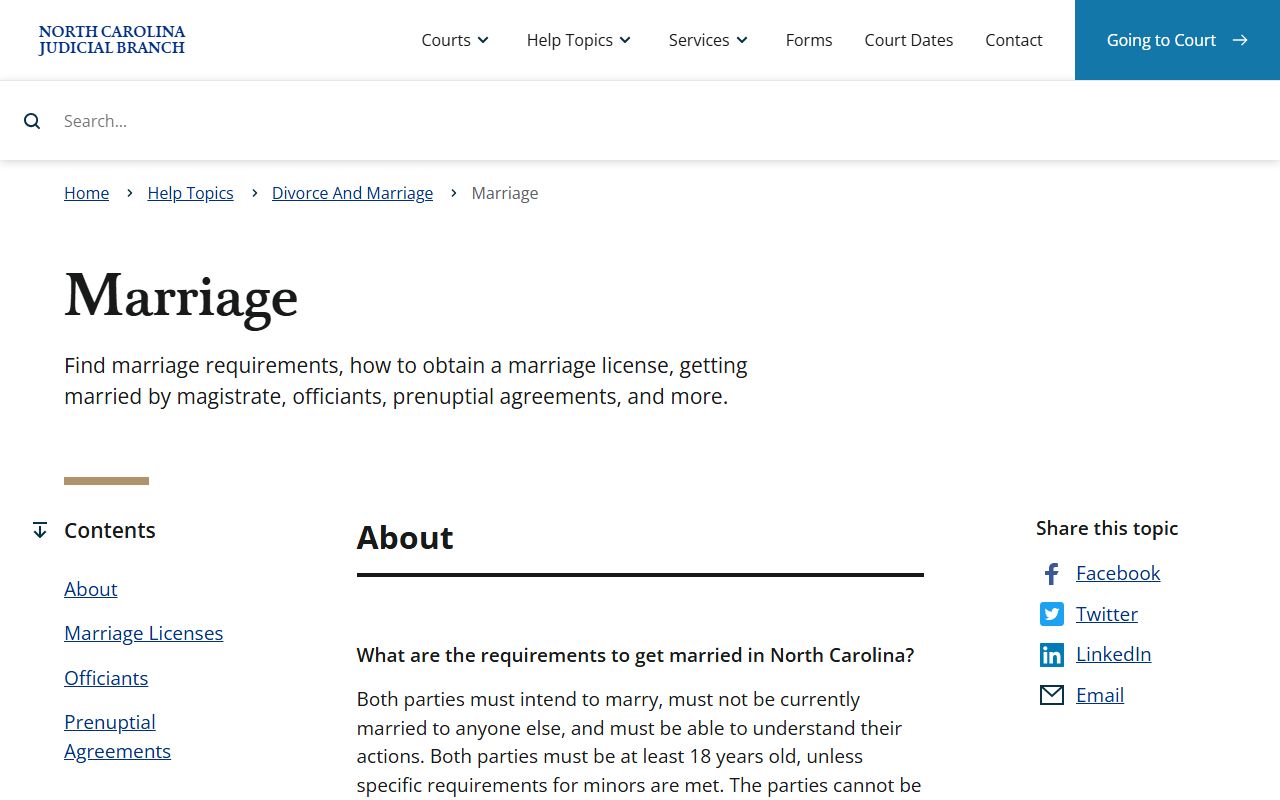
Marriage proof and estate authority are separate records, but both may be needed when a surviving spouse is handling probate business.
For court-record access rules more broadly, the Moore County Clerk of Superior Court is the local source for certified copies, paper files, and case-specific questions.
Older Moore County Estate Clues
Older estate research may involve more than the probate file. The Register of Deeds page warns that back-filing for records from 1/1/1888 to 6/30/1988 is still in process and tells users to check office index books to make sure all parties are found. That warning applies to recorded instruments and vital-record indexes, not to every court estate file, but it matters when a probate search depends on land transfers, marriage proof, name history, or family-record context.
For that reason, an older Moore County probate search may require both offices. The Clerk of Superior Court handles the estate case and certified court copies. The Register of Deeds handles marriage records, recorded documents, plats, powers of attorney, and other recorded instruments that may help identify heirs, property, or spouse status. Keeping those offices separate reduces missed records and prevents a courthouse search from being treated as a complete real-estate or vital-record search.