
How to Search Moore County Court Records
The primary online path is the NC eCourts Portal. Moore County joined eCourts in Track 6, so public users can start with Smart Search for case information, Search Hearings for court dates, Make Payments for eligible criminal and infraction obligations, and NC Judgment Search for judgment index data. The portal is statewide, so county filters matter. Select Moore County when the interface offers a location or county choice.
Online records are not the whole record system. Public self-service terminals in clerk offices can show criminal, civil, special proceeding, and estate case information. Paper files for Moore County cases are reviewed through the Moore County Clerk of Superior Court. Certified copies must come from the clerk for the county where the case was filed, because NCAOC public-record staff cannot certify case records.
Several fallback channels are important in Moore County. Court dates and hearing settings may be checked through Search Hearings and local administrative schedules. Background checks for a certified single-county criminal search use form AOC-CR-314 at the clerk's office. Incident reports do not come from the court file at all; county incidents route through the Moore County Sheriff's Office, while incidents inside municipalities route to the proper police department. Register of Deeds records also stay outside the court-record channel.
- Open the portal and confirm JavaScript and cookies are enabled.
- Choose Smart Search for case records, Search Hearings for dates, or NC Judgment Search for indexed judgments.
- Search by party name, business name, case number, attorney, judicial officer, courtroom, or date range when those fields are offered.
- Use Moore County as the location filter before relying on a result as local.
- Contact the Clerk of Superior Court for paper files, certified copies, older records, or unclear case status.
The official Portal training page describes Smart Search, hearing search, payment options, wildcard searching, and judgment lookup.
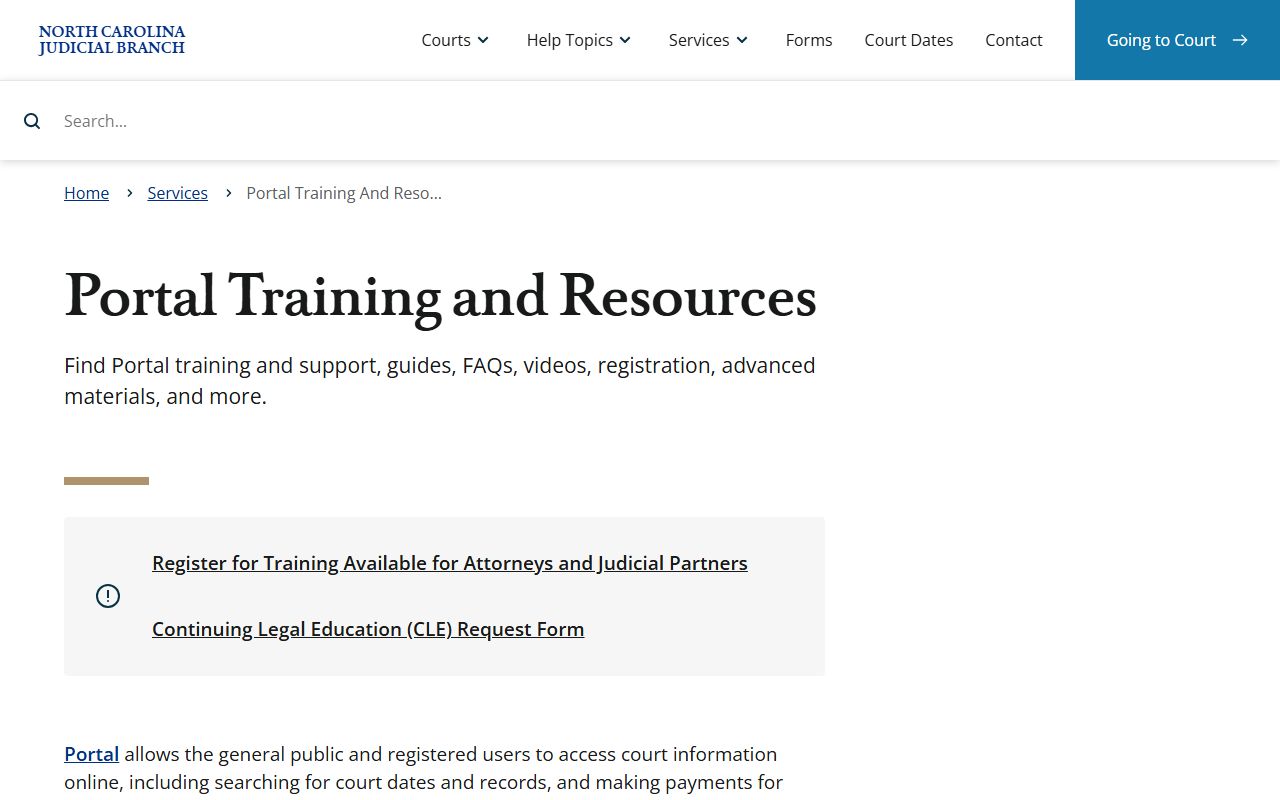
Those training notes are important for Moore County court records because wildcard name and case-number searches can change what appears in a public lookup.
Moore County Court Records Search Fields
The portal uses different search tiles instead of one single county index. Smart Search is the broad case lookup. Search Hearings is the docket and calendar lookup. NC Judgment Search focuses on judgment indexes, and Make Payments is limited to eligible obligations. Anonymous public access is available for public functions, but the portal displays notices about browser support, cookies, and a CAPTCHA challenge every ten minutes.
| Field Label | Type | Required | Notes / Format |
|---|---|---|---|
| Smart Search | Search mode | No | Search for court records and case information. |
| Search Hearings | Search mode | No | Search court dates by name, case, county, date range, and more. |
| Name | Text | No | Wildcard name searches may use at least three last-name characters plus an asterisk. |
| Case number | Text | No | Wildcard case searches may use at least four characters plus an asterisk. |
| County / location | Filter | No | Use Moore County when filtering local results. |
| Attorney or bar number | Text | No | Available for hearing searches. |
| Judicial officer / courtroom | Text or filter | No | Available for Search Hearings. |
| Case type, status, date | Filters | No | Judgment Search can filter by type, status, location, and judgment date. |
The Judicial Branch public-record request page is a different channel for administrative records, not the normal route for certified Moore County case files.
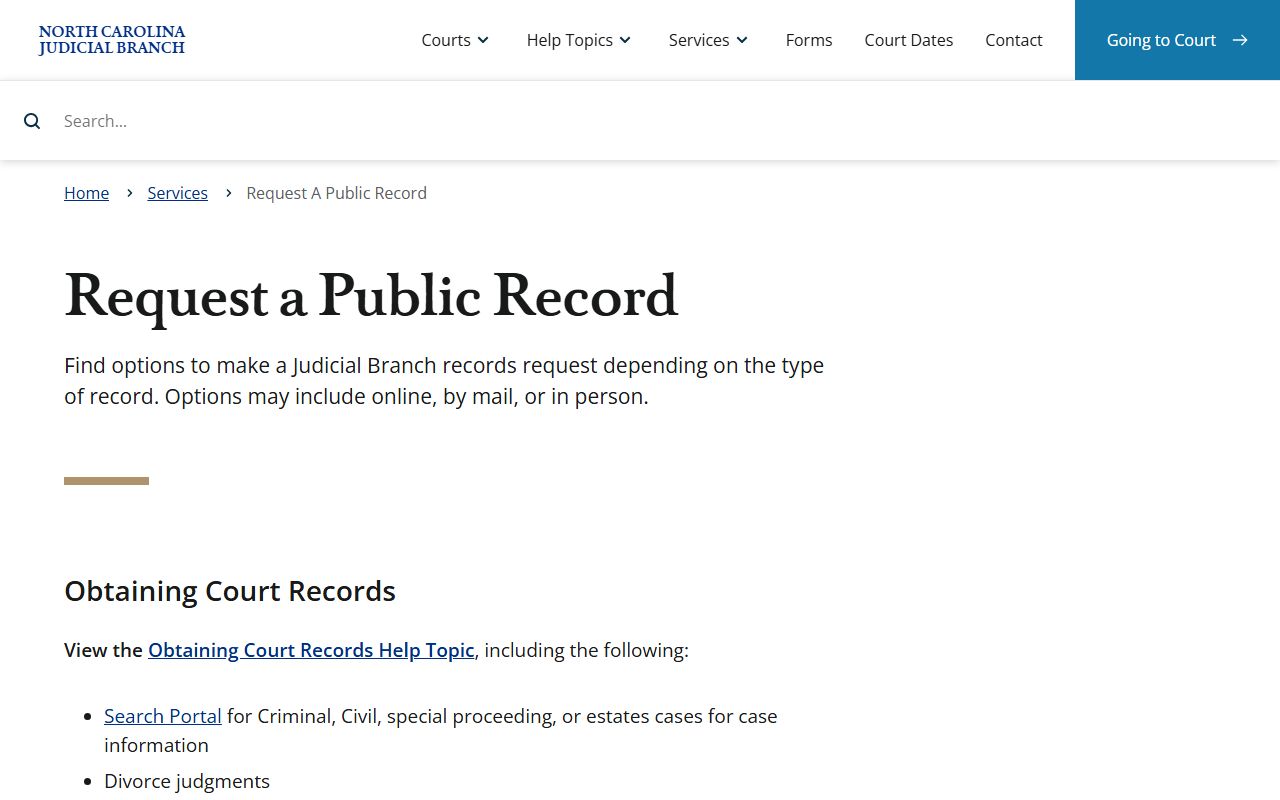
Use that request process when the record is an existing Judicial Branch administrative record rather than a county case document held by the clerk.
Types of Moore County Court Records
Moore County court records are divided by court function, not by city. North Carolina has no separate municipal trial court layer, so criminal, traffic, civil, family, juvenile, small-claims, estate, and special proceeding records route through Superior Court, District Court, magistrate functions, or the Clerk of Superior Court. Law-enforcement incident reports are different. Sheriff reports for county incidents are handled by the Moore County Sheriff's Office, and incidents inside a town may route to that municipal police agency.
Some records that look court-related are not court files. Marriage licenses, certified marriage copies, birth and death records, deeds, plats, powers of attorney, and recorded instruments are Moore County Register of Deeds records. Divorce judgments, estate files, civil judgments, criminal case files, and traffic case files are court records handled through the clerk and the Judicial Branch.
Moore County's court structure also affects where records are produced. Felony cases and higher civil matters are Superior Court records. Misdemeanors, infractions, traffic, domestic matters, juvenile matters, and lower civil cases are District Court records. Magistrate activity, such as initial appearances and certain warrants, feeds into the same state court system instead of a separate local court. Estate and probate materials are clerk records even when the case is not a typical lawsuit.
- Criminal records include felony, misdemeanor, infraction, charge, plea, judgment, sentence, probation, cost, and hearing data.
- Civil records include complaints, summonses, answers, motions, orders, judgments, liens, foreclosures, and related filings.
- Family records include divorce, custody, support, alimony, equitable distribution, and protective-order cases, subject to privacy limits.
- Estate and special proceeding records include probate, administration, inventories, accountings, guardianship filings, and clerk orders.
- Traffic records include citations, waivers, hearings, dispositions, fines, costs, and payment status.
What Moore County Court Records Show
A case result is usually a summary, not every paper in the file. A useful Moore County court records lookup may show the case number, division, county, case type, parties, filing date, charges or claim type, hearing dates, disposition, judgment, and financial obligations. Document visibility depends on the record, access level, privacy rules, and whether the matter is sealed, expunged, juvenile, adoption-related, or otherwise restricted.
| Field | What It Shows |
|---|---|
| Case number | North Carolina case identifier, often using year, case type, and sequence format. |
| Court division | Superior Court, District Court, estate, special proceeding, judgment, or other division context. |
| Parties | Plaintiff, defendant, State, petitioner, respondent, estate, or other party names when public. |
| Docket entries | Filed papers, hearings, orders, continuances, judgments, dismissals, and appeal activity. |
| Disposition | Pending, disposed, dismissed, judgment entered, closed, appealed, sealed, or expunged status. |
| Financial data | Fines, fees, restitution, costs, civil judgment amounts, and eligible payment information. |
The official NCAOC public-records policy explains inspection, copy fees, extraordinary request costs, and certification limits.
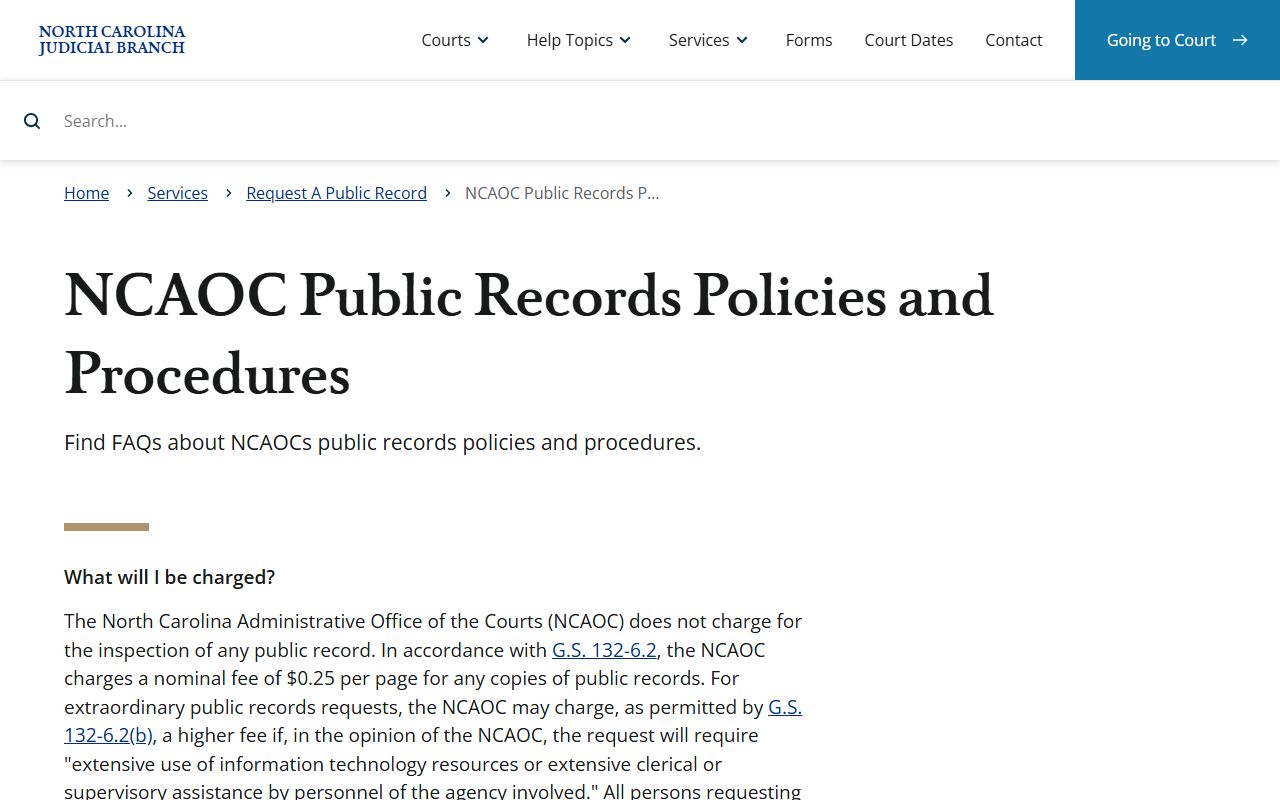
That policy helps separate ordinary inspection rights from the special process needed when a Moore County court record must be certified.
Public Access Framework for Moore County Court Records
North Carolina public-record law and court-record law work together, but they are not the same channel. G.S. 132-1 broadly defines public records for state and local government. G.S. 132-6 covers inspection and copies at reasonable times. Court case files are also governed by G.S. 7A-109, which requires clerks to maintain court records, files, dockets, and indexes open during regular office hours unless law restricts access.
Inspection of NCAOC public records is not charged. Copies under the NCAOC policy are $0.25 per page under G.S. 132-6.2, and extensive requests may carry a higher special service charge after an estimate. Certified criminal background checks are different: the single-county AOC-CR-314 search is handled by the Clerk of Superior Court and costs $25.
Note: Certified Moore County court records must come from the clerk where the case was filed, not from the NCAOC request desk.
The public-record request form is visible through the Judicial Branch request form.
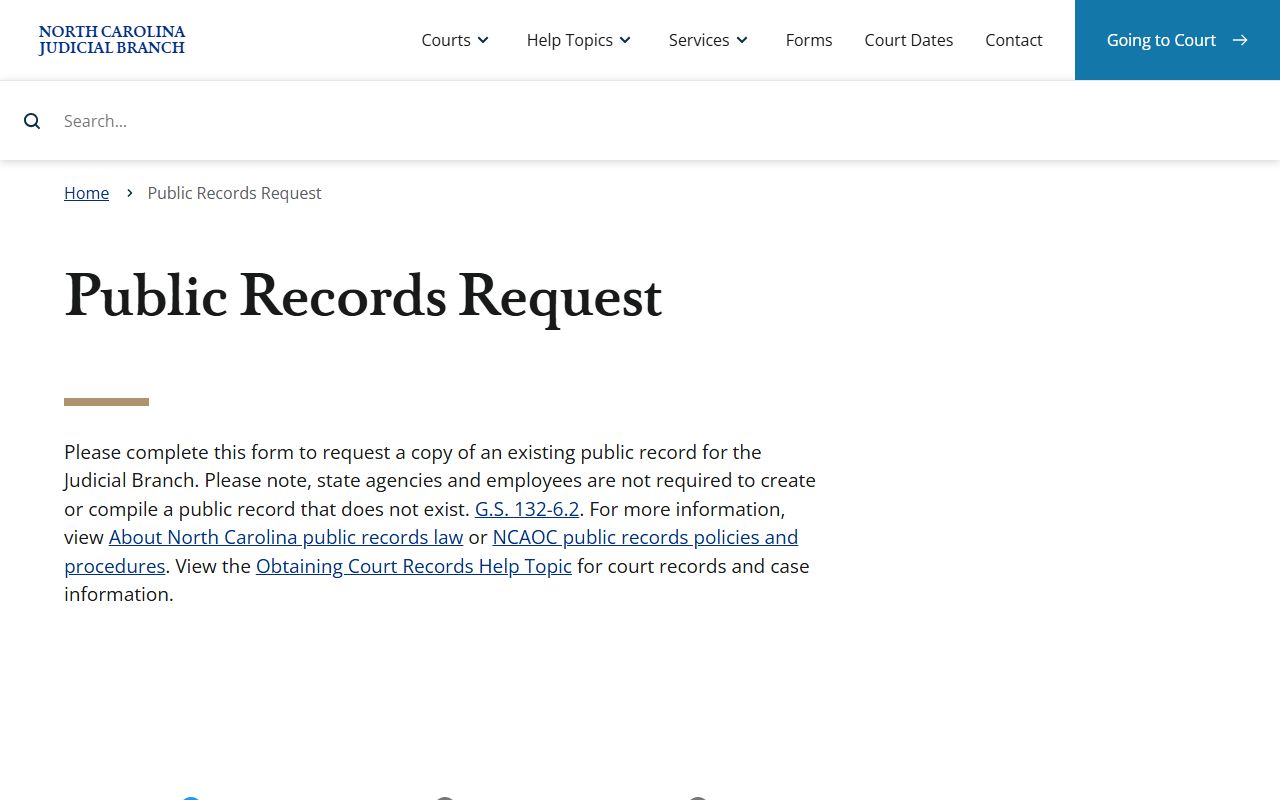
Use the form only after checking whether the record is a case file that belongs with the Moore County Clerk of Superior Court.
Restricted Moore County Court Records
Public access has limits. Juvenile delinquency, abuse, neglect, dependency, adoption, and many mental-health records are restricted. Sealed and expunged records should not appear through ordinary public portal or terminal searches. Personal identifiers such as Social Security numbers, account numbers, driver license numbers, passport numbers, protected addresses, and minor information may be redacted or withheld even when the rest of a file is open.
Expunction is a court process, not a website correction. A person seeking to remove an eligible North Carolina record must identify the charge or conviction, match it to the proper expunction statute, and file in the county where the matter occurred. G.S. 15A-145.5 covers certain nonviolent misdemeanors and felonies, while Chapter 15A Article 5 contains other categories. Eligibility depends on the statute, disposition, waiting period, offense type, and prior record.
The court-record statute screenshot comes from G.S. 7A-109.
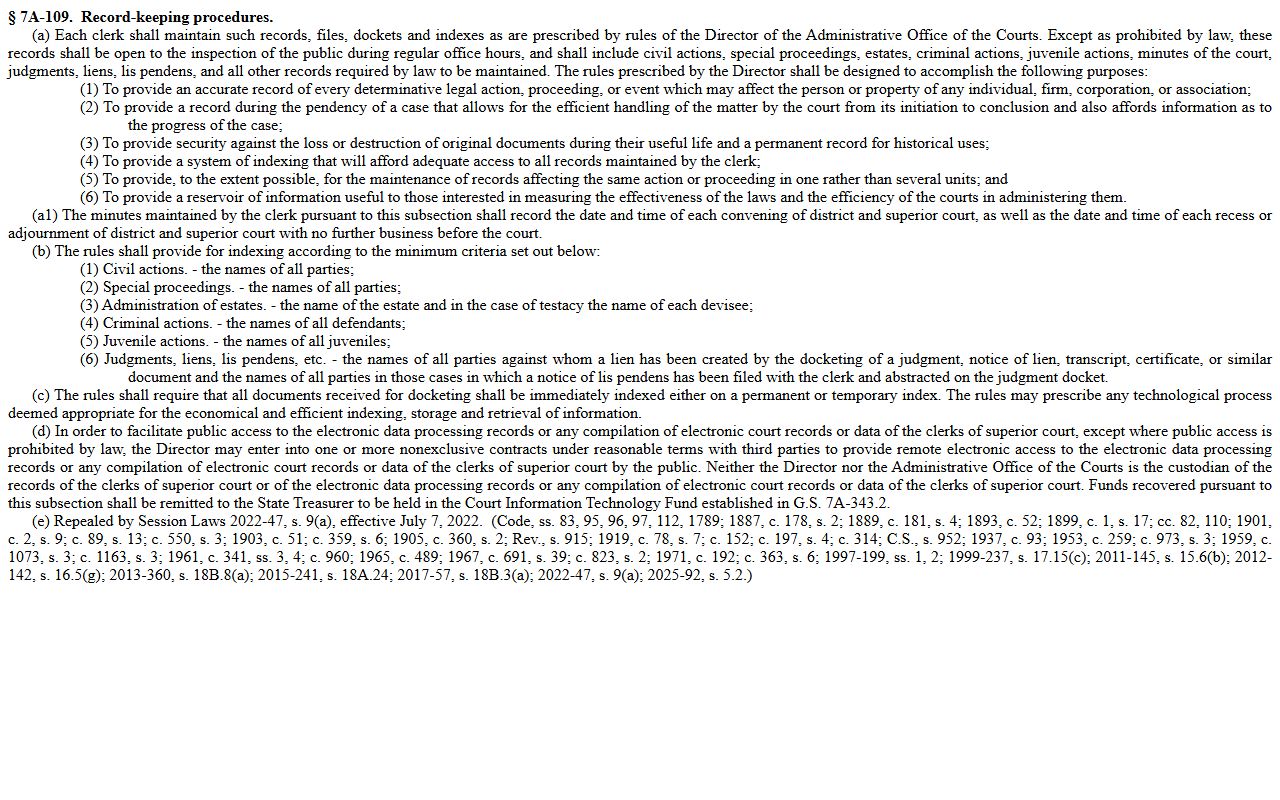
That statute is the key reason Moore County case-file access runs through the Clerk of Superior Court rather than a generic county records portal.
In-Person Moore County Court Record Requests
For older files, paper review, certified copies, or questions about a specific case assignment, contact the Clerk of Superior Court at the Moore County Courthouse. The courthouse is the local point for Superior Court, District Court, magistrates, family court administration, jury service, court payments, public terminals, and physical court files. Public hours are Monday through Friday, 8:00 AM to 5:00 PM.
Bring the case number if available. If the case number is not known, use names, approximate filing dates, party roles, and case type to help staff identify the file. Family Court Administration tells callers to have the file number from the upper right corner of court papers ready, using a format like 00-CVD-0123. For certified criminal background checks, the search is by name and is limited to one county, so it is not a statewide criminal-history product.
Moore County Clerk of Superior Court
102 Monroe St
Carthage, NC 28327
Mailing: PO Box 936, Carthage, NC 28327
(910) 722-5000
Monday-Friday, 8:00 AM-5:00 PM
The copy-fee rule for North Carolina public records is summarized in G.S. 132-6.2.
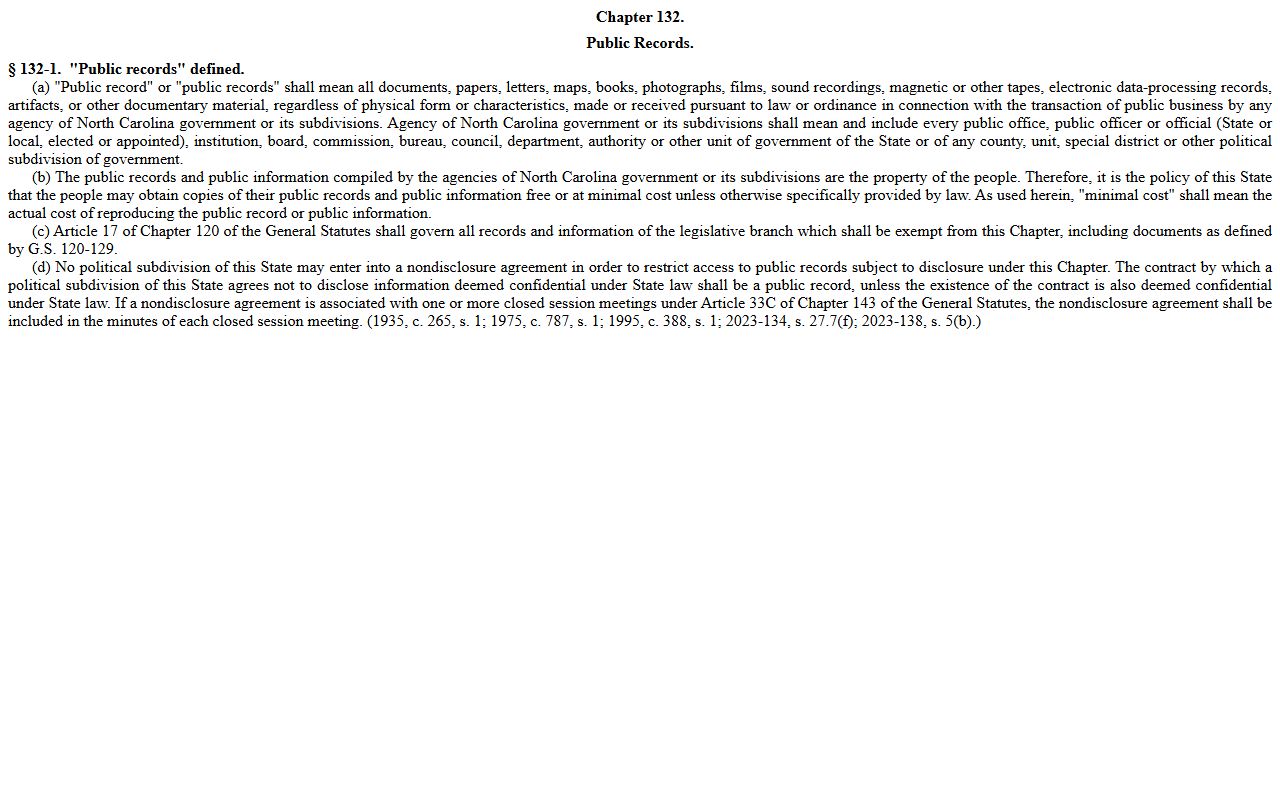
The public-record definition is broad, but Moore County case-file copies still follow the court-record route through the clerk.