
Moore County Clerk of Superior Court
Moore County court records are handled by the Clerk of Superior Court, not by a county clerk or district clerk. North Carolina uses a unified state court system, and the Clerk of Superior Court is the elected court official responsible for clerical and record-keeping functions in both the Superior Court Division and the District Court Division. The research identifies Todd Maness as the Moore County Clerk of Court and lists the clerk contact through the official Judicial Branch county directory.
The clerk is the practical records counter for criminal cases, civil cases, special proceedings, estates, divorces, judgments, and other court files. The clerk also serves as judge of probate for estate administration. Separate county records, such as marriage licenses, certified marriage copies, birth and death records, deeds, powers of attorney, plats, and assumed business names, are handled by the Moore County Register of Deeds.
Moore County Clerk of Superior Court
Clerk: Todd Maness
Moore County Courthouse
102 Monroe St
Carthage, NC 28327
Mailing: PO Box 936, Carthage, NC 28327
(910) 722-5000
Monday-Friday, 8:00 AM-5:00 PM
Moore County Clerk Record Duties
The clerk maintains court records, files, dockets, and indexes for Moore County cases. That includes files that begin in District Court, files that move through Superior Court, and estate records opened through the clerk's probate authority. The clerk's office is also the place to request certified case documents because the North Carolina Administrative Office of the Courts says it cannot certify records. Certification must come from the clerk for the county where the case was filed.
- Maintain criminal, civil, domestic, traffic, special proceeding, estate, and judgment records.
- Provide public terminal access for case information that is not legally restricted.
- Handle paper file review for Moore County cases at the courthouse.
- Issue certified copies for records filed in Moore County when certification is available.
- Process certified single-county criminal record searches through form AOC-CR-314.
- Administer estates and probate matters as the Clerk of Superior Court acting as probate judge.
The NCARD Moore County Register of Deeds profile helps show the line between clerk records and Register of Deeds records.
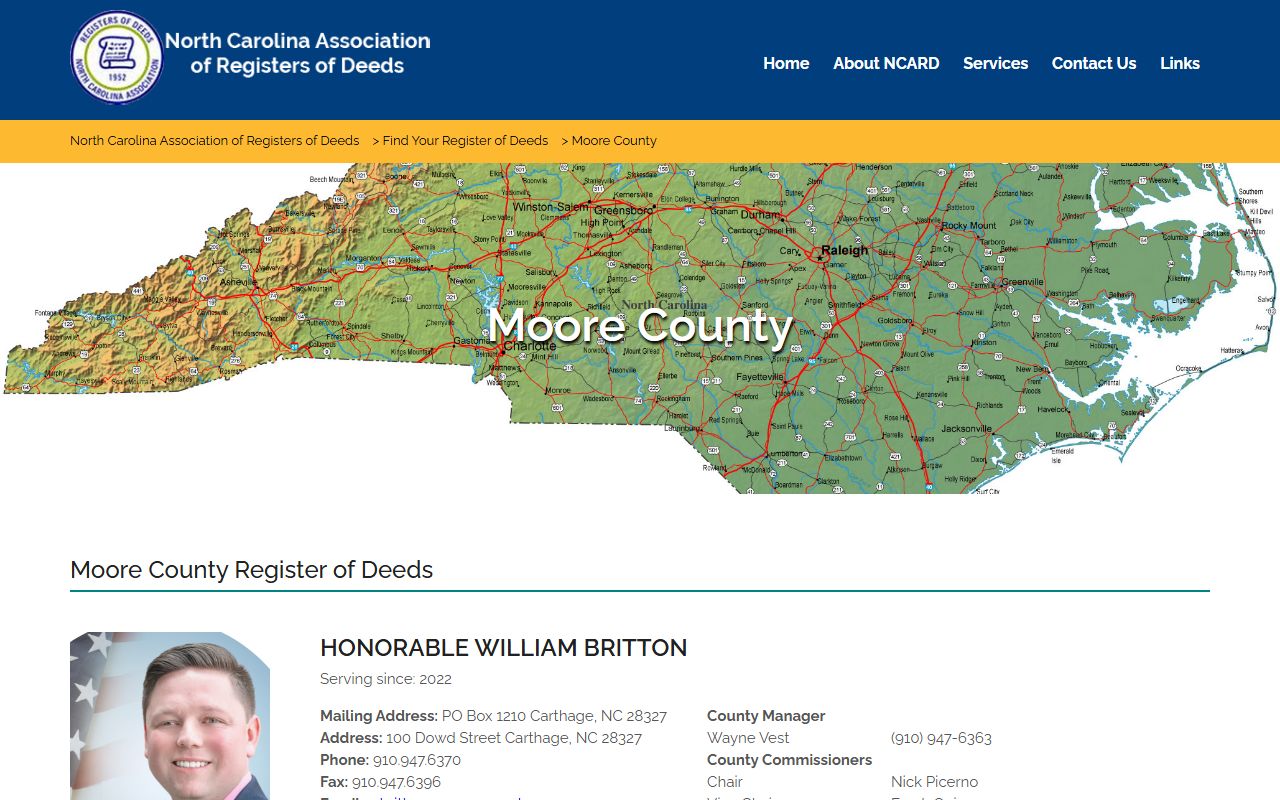
That distinction matters because many users search the clerk for marriage or deed records that are actually kept by the Register of Deeds.
Request Moore County Certified Copies
Certified copies are used when a person or agency needs an official court document with clerk authentication. A portal printout or ordinary copy may be enough for personal reference, but agencies often require certification for judgments, dispositions, name changes, divorce judgments, estate letters, and other court-file papers. The right request path depends on the case type, whether the case was filed in Moore County, and whether the record is public, sealed, expunged, juvenile, or otherwise restricted.
- Identify the case number if possible, or gather party names, approximate filing date, record type, and court division.
- Search the NC eCourts Portal or a public terminal to confirm that the case belongs to Moore County.
- Contact or visit the Moore County Clerk of Superior Court and specify that a certified copy is needed.
- Ask for the current copy and certification cost before mailing payment or sending a third party.
- Use the issuing office named by the clerk if the record is a Register of Deeds, law-enforcement, prison, DMV, or state vital-record document instead of a court file.
For estate papers, certified letters or orders connect to Moore County probate records, but the copy source remains the Clerk of Superior Court.
Moore County Clerk Request Fields
The Judicial Branch public-record request form is meant for existing public records and administrative Judicial Branch records. Case files and certified case documents usually route to the county clerk instead. A strong Moore County clerk request includes enough information for staff to identify the file without creating a new record or compiling data that does not already exist. For criminal background checks, the statewide help topic directs users to form AOC-CR-314 for a certified single-county search.
| Field | Required | Notes |
|---|---|---|
| Case number | Best if known | Family Court examples use a format such as 00-CVD-0123. |
| Party names | Yes | Use full legal names and known aliases when available. |
| Record type | Yes | State whether the request is for judgment, order, disposition, estate letter, docket entry, or another document. |
| County | Yes | Certified case documents come from the county where filed. |
| Certification request | Conditional | Say whether ordinary or certified copies are needed. |
| Requester contact | Yes | Include phone, mailing address, or email so the clerk can resolve fee or file questions. |
Moore County Clerk Fees
The research file provides several fee rules from official sources, but it does not list every Moore County court-copy or probate filing fee. The NCAOC public-records policy says inspection is not charged, ordinary NCAOC copies are $0.25 per page under G.S. 132-6.2, and extraordinary requests may involve a higher estimate when extensive IT or clerical assistance is required. Certified case records must be priced and issued by the county clerk that holds the file.
| Item | Amount or Rule |
|---|---|
| NCAOC public-record inspection | No inspection fee |
| NCAOC copies | $0.25 per page |
| Certified criminal record search, single county | $25 |
| Moore County certified case copy | Confirm with Clerk of Superior Court |
| Moore County probate filing cost | Confirm with Clerk of Superior Court |
| Certified marriage copy from Register of Deeds | $10 each, not a clerk court-file fee |
Note: A Register of Deeds fee does not apply to a court case copy, even when both offices are in downtown Carthage.
Moore County Clerk Search Channels
Online search starts with the NC eCourts Portal. The portal offers Smart Search for court records and case information, Search Hearings for court dates, Make Payments for some criminal and infraction matters, and NC Judgment Search for judgment indexes. The portal requires JavaScript and cookies. Official training materials also describe wildcard searching, hearing filters by party, attorney, judicial officer, courtroom, and county, plus judgment filters by party, case type, status, location, and judgment date.
When online search is not enough, the clerk's public terminals fill the gap. The Judicial Branch says criminal case information can be accessed at a public self-service terminal in any clerk of court's office by defendant name, case number, or victim or witness name. Civil, special proceeding, and estate case information can also be accessed on public terminals, while the physical file is reviewed in the clerk's office in the county where the case is located.
Sealed, expunged, juvenile, adoption, mental-health, guardianship, and protected-identifier material may not appear through ordinary public search channels.
Moore County Clerk Forms
Common clerk-related forms come from the North Carolina Judicial Branch rather than a separate county form library. The research file identifies the AOC-CR-314 certified criminal background check form for single-county criminal record searches and the Judicial Branch public-record request form for administrative records. Family Court Administration also tells parties to have the file number from the upper right corner of court papers ready when contacting a case manager, using the example 00-CVD-0123.
- AOC-CR-314 certified criminal background check - used for a certified criminal record search in one county.
- Judicial Branch public records request - used for existing NCAOC public records, not certified county case documents.
- Moore County local rules and forms - county Judicial Branch page for local rules, schedules, and forms.
Moore County Clerk vs Register
The Moore County Register of Deeds is not a second court clerk. It handles marriage licenses, certified marriage records, birth and death records, recorded documents, plats, assumed business names, powers of attorney, and redaction requests for recorded instruments. The county staff directory gives the office address as 26 Courthouse Square, Carthage, NC 28327, with phone 910-947-6370 and fax 910-947-6396. The NCARD profile lists Register William Britton and notes eRecording and NCDAVE participation.
The Register of Deeds redaction page explains the local path for removing sensitive identifiers from recorded instruments.
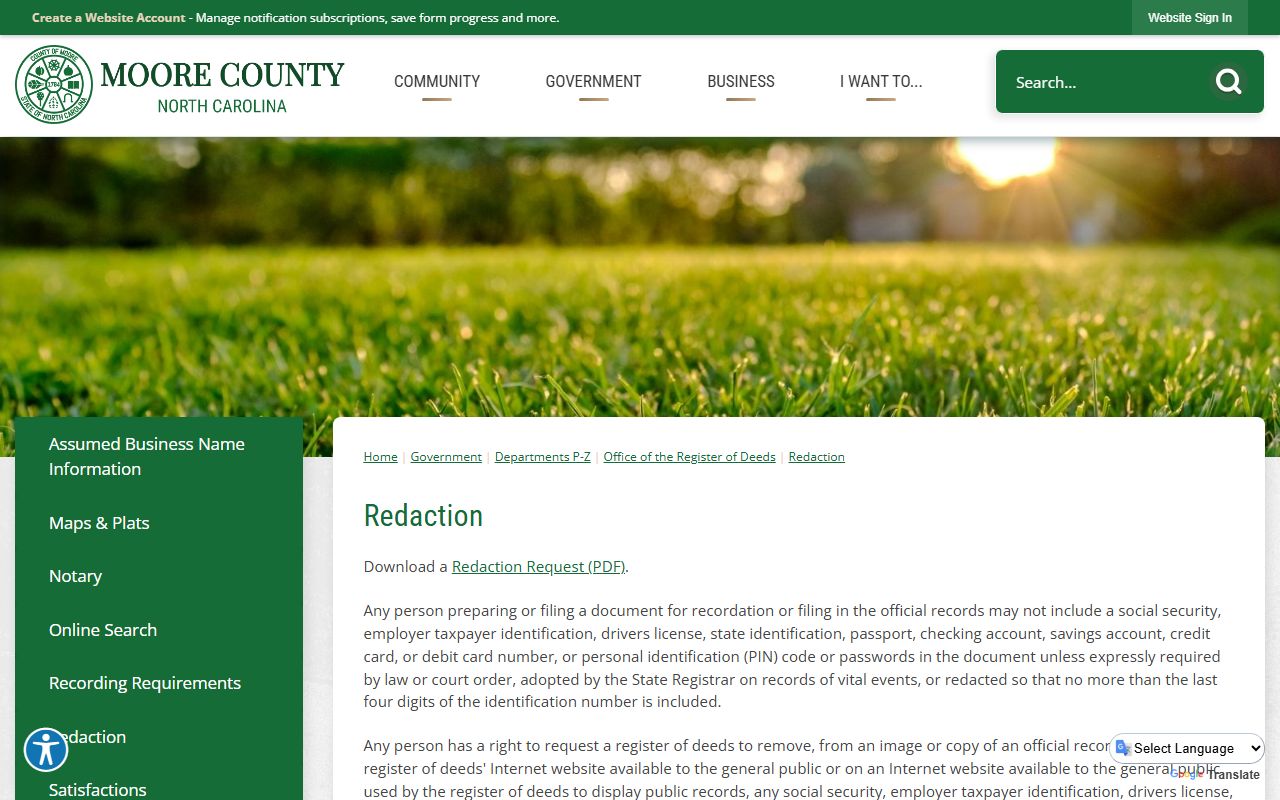
That redaction process is separate from sealing, expunction, or redaction of court case records held by the clerk.
The staff directory for the Register of Deeds shows the county contact details for non-court recorded records.
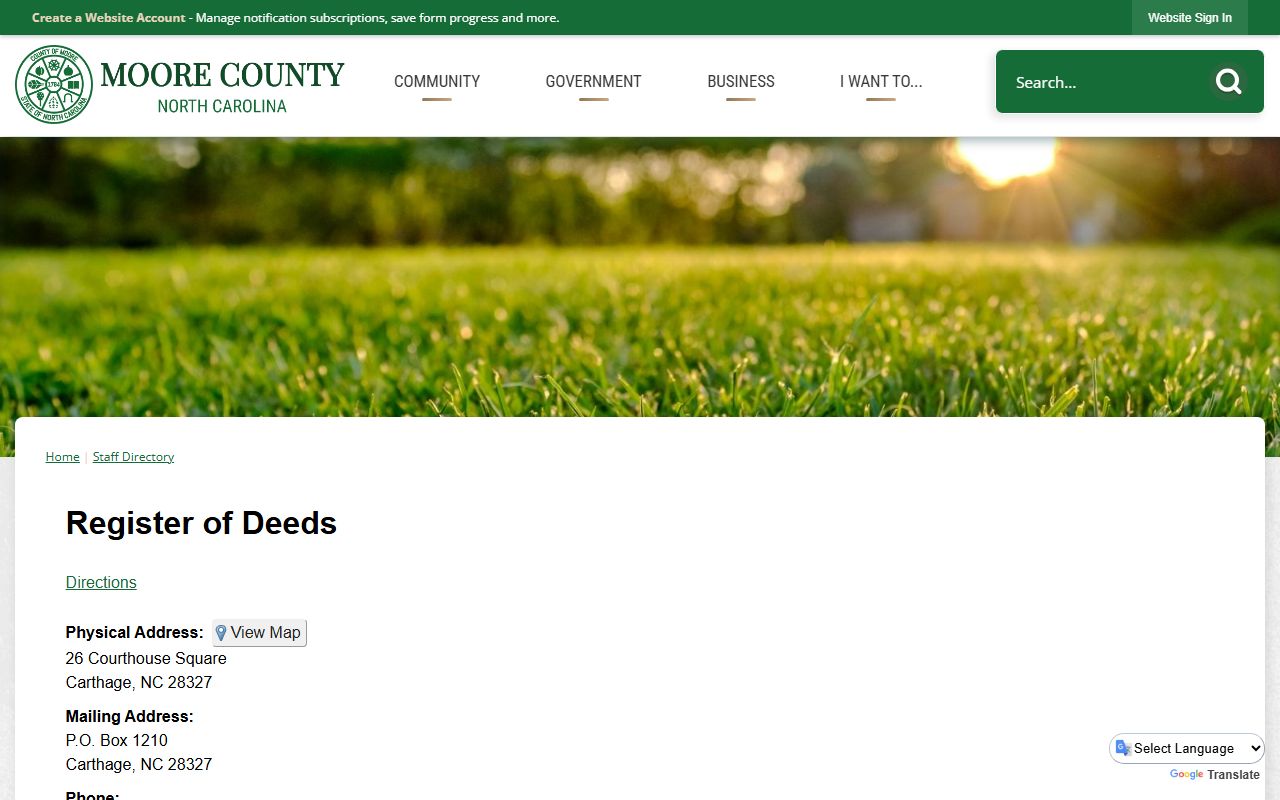
For marriage certificates and license questions, the Register of Deeds route is more direct than the Clerk of Superior Court route.
Moore County Clerk Filing Options
Moore County is part of North Carolina eCourts. The research file states that Moore County went live in eCourts Track 6 on October 14, 2024. Online portal access supports public case searches, hearing searches, judgment searches, and some payments. File & Serve resources explain mandatory attorney eFiling, optional self-represented filing, registration, eService, fees, and 24/7 availability. Case-specific questions still go to the Clerk of Superior Court in the county where the case is assigned.
Mail remains important for paper copy requests, certified criminal background check requests, and filings that are not completed through an online system. Use the courthouse mailing address only after confirming the correct fee, copy type, and record source. A marriage or deed request should go to the Register of Deeds, while a divorce judgment, estate record, criminal disposition, civil judgment, or court order should route to the Clerk of Superior Court if filed in Moore County.
For marriage licenses and certified marriage records, use Moore County marriage and divorce records to avoid sending vital-record requests to the court clerk.