
Moore County Arrest Records and Charges
Moore County arrest records begin on the law-enforcement side. They may connect to a Sheriff incident report, detention intake, current custody listing, or a municipal police report when the event occurred inside a city or town. The court charge record begins when the accusation reaches the North Carolina court system. From that point, the Clerk of Superior Court records the case number, charge, hearing dates, filings, disposition, and judgment details that become part of the court file.
That split matters. A person may be arrested, booked, released, and later have charges reduced or dismissed. Another person may have several charges from one arrest with different outcomes. The jail roster can help confirm current custody, but the full result lives in Moore County criminal court records. The official court record is the better source for plea, conviction, sentence, and dismissal status.
The Moore County Sheriff's Office page is an official starting point for Sheriff contact, law-enforcement services, and local public-safety notices.
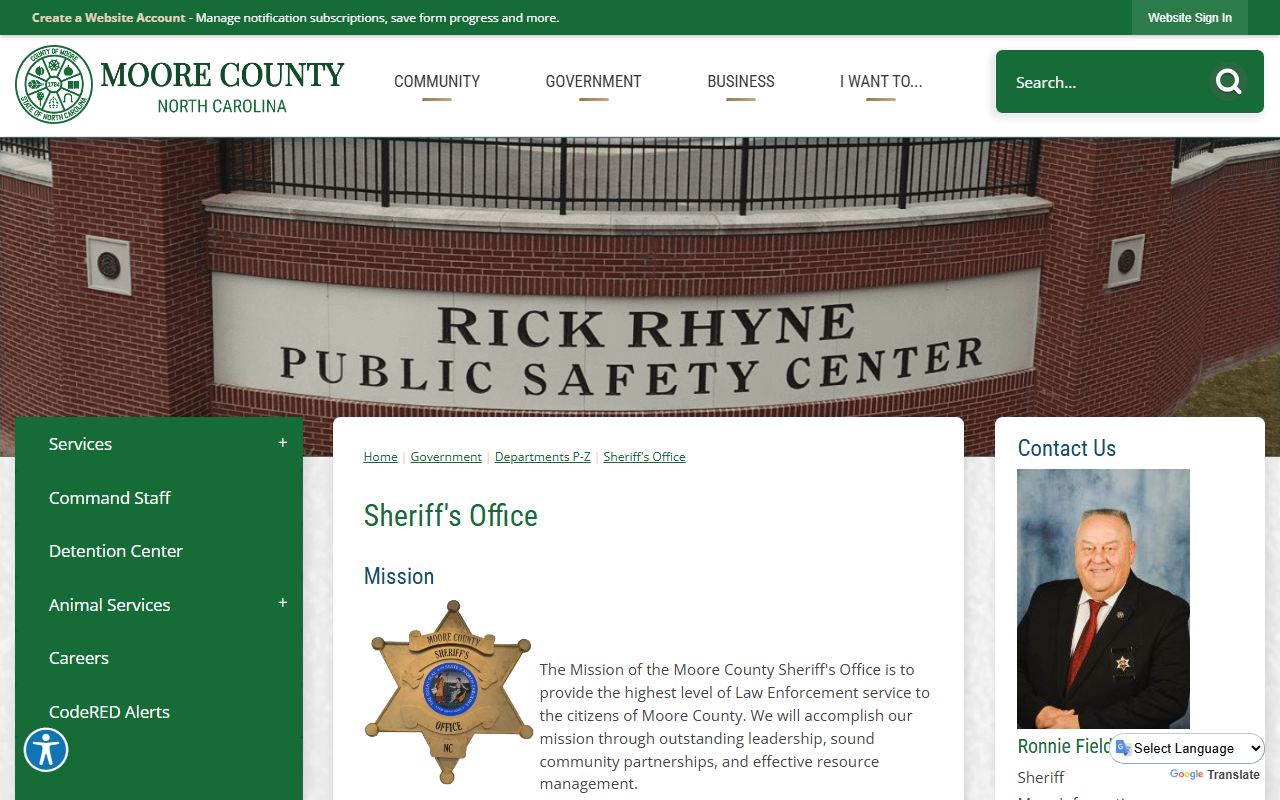
Sheriff contact is useful for county incident-report questions, while the court record remains the source for filed charge outcomes.
Find Moore County Arrest Records
The best search path depends on the question. For current custody, use the Moore County Detention Center portal. For court charges after arrest, use the NC eCourts Portal Smart Search and hearing search tools. For incident reports, the Sheriff services page says county incidents can be handled through the Sheriff, while municipal incidents should go to the local police department such as Carthage, Southern Pines, or Aberdeen.
- Check the Moore County Detention Center portal for current custody by name, charge description, or recent days.
- Open the NC eCourts Portal and use Smart Search for the court charge record.
- Search by defendant name or case number, then filter to Moore County when available.
- Read each charge separately because one arrest can produce several counts with different status lines.
- Contact the Clerk of Superior Court for certified copies or older paper case files.
A search may also need a statewide source. The NC Department of Adult Correction offender search covers state prison, probation, and parole data, but it does not include county jail information. VINE provides custody and criminal-case notifications, while the NC SBI sex-offender registry is a separate registry search.
Moore County also has a local incident-report split that affects arrest-record searches. The Sheriff's services page says county incidents can be handled through the Sheriff's Office, but incidents in a municipality should be filed or requested through that municipal agency. A Southern Pines, Aberdeen, or Carthage police incident may later produce a Moore County court case, yet the original police report is not held by the Clerk of Superior Court. Use the court record for the charge outcome and the correct law-enforcement agency for the incident report.
Charges Filed After Arrest
After an arrest, the court charge record focuses on the accusation. In North Carolina records, a charge may appear through a citation, warrant or criminal process, indictment, or later amended charging entry. The research materials did not identify a separate Moore County public field guide for every charging document label, so the safest reading is to use the case file, charge description, and court status together.
| Charging document | Common role in the record | What to check next |
|---|---|---|
| Citation | Often starts traffic infractions or some misdemeanor matters. | Look for court date, waiver option, charge, and disposition. |
| Warrant or criminal process | May begin an arrest or require a person to appear on a criminal charge. | Check bond, first appearance, and next hearing entries. |
| Indictment | A formal felony accusation returned by a grand jury. | Look for Superior Court case activity and later plea or trial entries. |
The Moore County Sheriff's services page explains incident-report routing and other law-enforcement services.
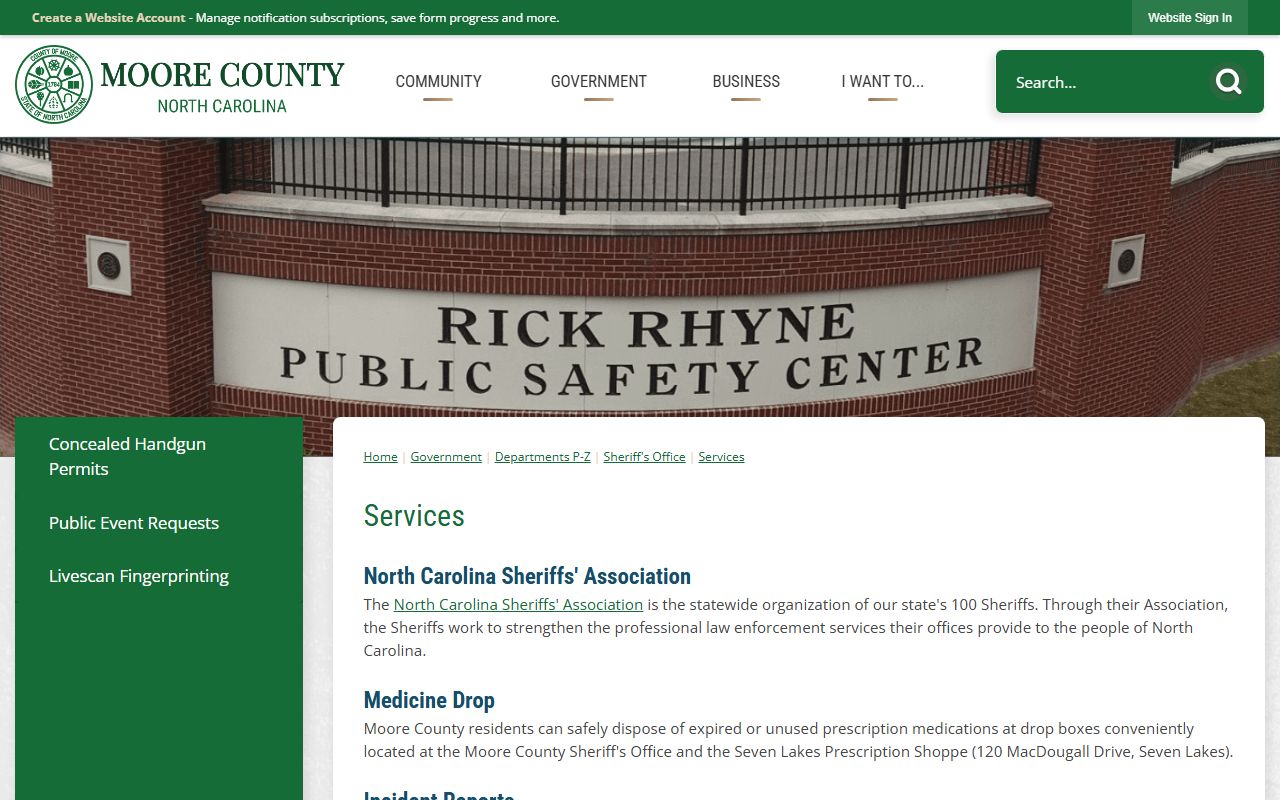
Incident reports can explain the law-enforcement event, but they are not the final court charge disposition.
Moore County Charge Status
A charge status can change as prosecutors, defense counsel, and the court address the case. Moore County court records may show pending entries, dismissal, judgment, closure, appeal, or other disposition language. The most important rule is simple: read the status for each charge, not just the first line on the case.
| Status | What It Means | Why It Matters |
|---|---|---|
| Pending | The charge has not reached final disposition. | Future hearing dates, motions, or plea activity may still appear. |
| Amended or reduced | The charge description or severity changed during the case. | The original accusation and final result may differ. |
| Dismissed | The court record shows that charge ended without a conviction. | Other charges in the same case may still have a different result. |
| Judgment entered | The court entered a final judgment on the charge or case. | Sentence, costs, probation, or appeal entries may follow. |
Note: A dismissed charge can still appear in public court history unless a sealing or expunction order changes access.
Prosecutor Review in Moore County
Moore County is in Prosecutorial District 29 with Hoke County. The District Attorney page identifies Mike Hardin as District Attorney and describes the office as representing the public and victims in criminal cases against accused people. That office reviews criminal matters for prosecution, amendment, dismissal, plea negotiation, and trial preparation.
For searchers, the practical effect is that the first arrest label may not be the final court label. A charge may move from District Court toward Superior Court, be reduced, be dismissed, or be resolved by plea. The court case file is where those decisions should be checked.
The official Sheriff Ronnie Fields directory bio identifies the county sheriff and his law-enforcement background.
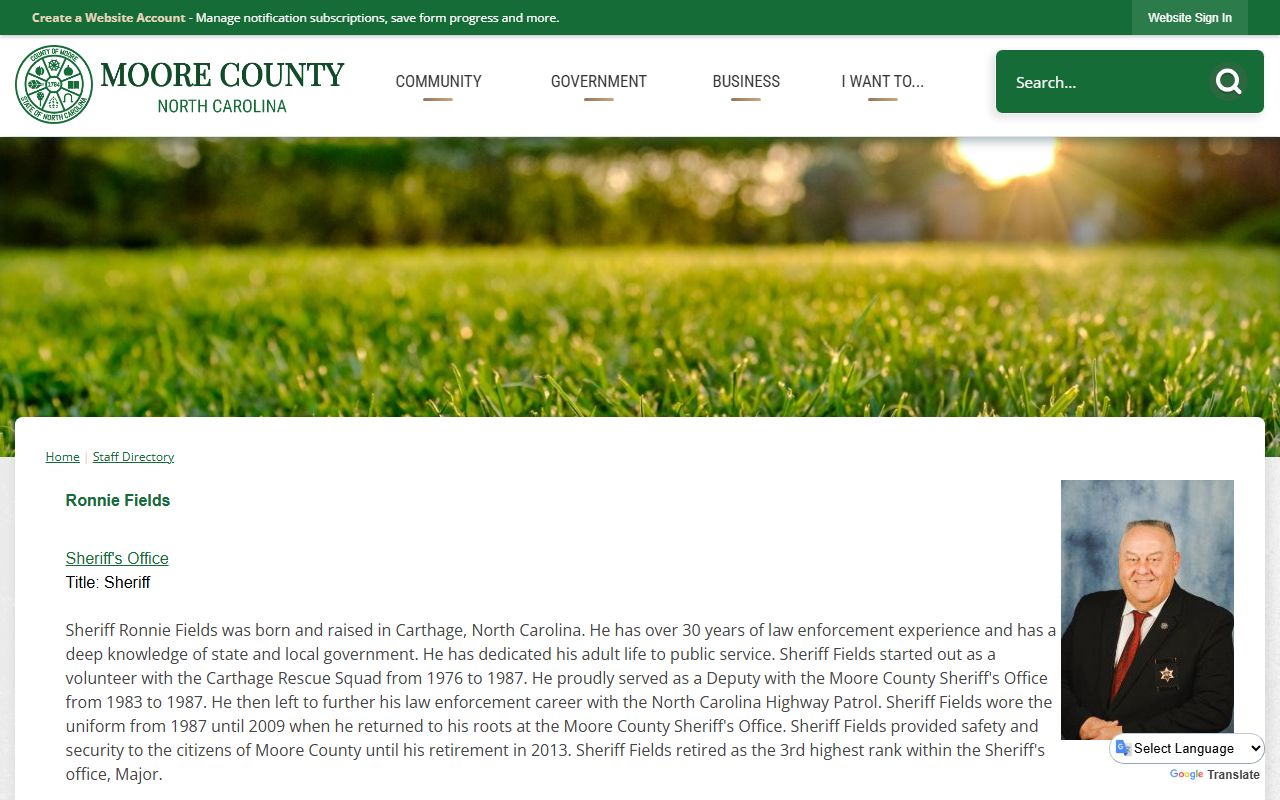
The Sheriff and District Attorney have different roles: law enforcement handles the arrest event, and the prosecutor handles the State's court charge decisions.
Charges vs Convictions
Being charged is not the same as being convicted. Moore County arrest records can show the start of the matter, and court charges can show the accusation, but a conviction requires a court outcome. A record user should check the disposition before treating a charge as a final criminal finding.
| Point | Charge | Conviction |
|---|---|---|
| Meaning | An accusation filed in court after arrest, citation, or criminal process. | A guilty plea, verdict, or judgment of guilt. |
| Timing | Early case event. | Later case result. |
| Where to verify | NC eCourts Portal, clerk terminal, or court file. | Disposition, judgment, sentencing, and payment entries. |
| Common mistake | Treating the accusation as proof. | Ignoring separate dismissed or reduced counts. |
Jail Charges and State Searches
The Moore County detention portal includes an inmates grid and a charges grid. The inmates grid shows Full Name, Age, Race, Sex, and Admit Date. The charges grid lists charge descriptions and supports filtering. Those tools help identify current custody and common charge labels, but they do not replace the court case file for final disposition.
The NC Department of Adult Correction offender-search page explains statewide prison, probation, parole, and related searches.
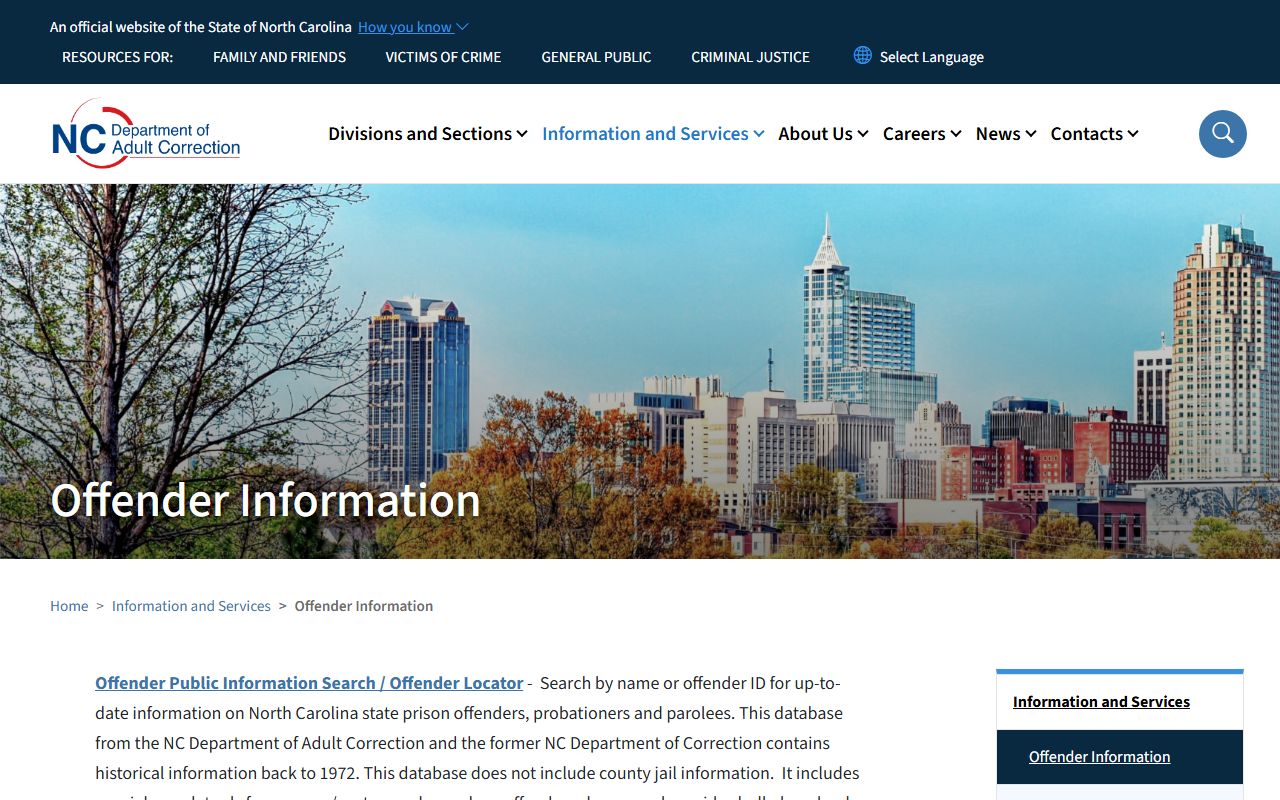
NC DAC is useful for state correction status, but the research file states that it excludes county jail information.
Access Limits for Charge Records
North Carolina public access rules allow many adult criminal court records to be inspected, but several limits apply. Juvenile records, sealed records, expunged matters, mental-health records, adoption-related files, and personal identifiers are restricted or redacted. Public-record requests to NCAOC are not a substitute for Moore County court case copies from the Clerk of Superior Court, and NCAOC cannot certify county case documents.
The NC SBI sex-offender registry portal is a separate official search source referenced by Moore County Sheriff materials.
Registry records, detention entries, incident reports, and court charge records answer different questions and should not be merged into one result.
Restricted Moore County Charge Records
Some Moore County charge records will not appear in a public search. A sealed case may be closed by court order. An expunged matter may be removed from ordinary public access after a statutory process. Juvenile cases are not searched like adult criminal cases. Search warrants may also be sealed, especially before or during active investigative use.
For a certified single-county criminal record search, the Judicial Branch points users to the Clerk of Superior Court and form AOC-CR-314. The research file lists the fee as $25 and describes the scope as Moore County court records only. That search is narrower than a statewide criminal-history product and different from a private background report.
Expunction is also source-specific. North Carolina Chapter 15A, Article 5 contains several expunction paths, and G.S. 15A-145.5 addresses certain nonviolent misdemeanors and felonies. Eligibility depends on the charge, disposition, waiting period, and prior record. A dismissed Moore County charge may still appear in ordinary public court history unless a valid expunction or sealing order changes access. The public page should not be read as a promise that any charge can be removed.
For certified proof, use the court source rather than a jail or incident source. The Clerk's single-county background check searches Moore County court records by name and can be certified by the local clerk. A detention charge grid can help locate current custody, and an incident report can describe the law-enforcement event, but neither one certifies the final court outcome.
Important: Charge lookup shows public record access, not permission to use the data for FCRA-regulated screening.